
INTRODUCTION
This module manual provides information about the North Atlantic Industries, Inc. (NAI) Digital-to-Analog Function Module: DA4. This module is compatible with all NAI Generation 5 motherboards. Digital-to-Analog (D/A) module DA4 provides 4 independent D/A output channels with a full-scale range ±100 VDC @ ±10 mA (max). Linearity/accuracy is ±0.15% FS range over temperature. The DA4 provides voltage control loop mode, which is programmable for the application.
FEATURES
-
High-quality D/A conversion, 16-Bit/channel
-
Designed to meet the testing requirements of IEC 801-2 Level 2
-
Continuous background BIT
-
Automatic shutdown protection with the results displayed in a status word
-
Extended D/A FIFO buffering capabilities
PRINCIPLE OF OPERATION
In addition to the functions and features already described, this module includes extensive background BIT/diagnostics that run in the background in normal operation without user intervention. In addition to output signal read-back (wrap) capabilities, overloaded outputs will be detected with automatic channel shutdown protection, with the results displayed in a status word. The module also include D/A FIFO Buffering for greater control of the output voltage and signal data. The FIFO D/A buffer will accept, store, and output the voltage commands, once enabled and triggered, for applications requiring simulation of waveform generation; single or periodic. The output data command word is formatted as a percentage of the full scale (FS) range selection, which allows maximum resolution and accuracy at lower voltage ranges.
Built-In Test (BIT)/Diagnostic Capability
The DA4 module supports three types of built-in tests: Power-On, Continuous Background and Initiated. The results of these tests are logically OR’d together and stored in the BIT Dynamic Status and BIT Latched Status registers.
Power-On Self-Test (POST)/Power- On BIT (PBIT)/Start-Up BIT (SBIT )
The power-on self-test is performed on each channel automatically when power is applied and report the results in the BIT Status register when complete. After power-on, the Power-on BIT Complete register should be checked to ensure that POST/PBIT/SBIT test is complete before reading the BIT Dynamic Status and BIT Latched Status registers.
Continuous Background Built-In Test (CBIT)
The background Built-In-Test or Continuous BIT (CBIT) (“D2”) runs in the background where each channel is checked to a test accuracy of 0.2% FS. The testing is totally transparent to the user, requires no external programming, and has no effect on the operation of the module or card.
The technique used by the continuous background BIT (CBIT) test consists of an “add-2, subtract-1” counting scheme. The BIT counter is incremented by 2 when a BIT-fault is detected and decremented by 1 when there is no BIT fault detected and the BIT counter is greater than 0. When the BIT counter exceeds the (programmed) Background BIT Threshold value, the specific channel’s fault bit in the BIT status register will be set. Note, the interval at which BIT is performed is dependent and differs between module types. Rather than specifying the BIT Threshold as a “count”, the BIT Threshold is specified as a time in milliseconds. The module will convert the time specified to the BIT Threshold “count” based on the BIT interval for that module. The “add-2, subtract-1” counting scheme effectively filters momentary or intermittent anomalies by allowing them to “come and go“ before a BIT fault status or indication is flagged (e.g. BIT faults would register when sustained; i.e. at a ten second interval, not a 10-millisecond interval). This prevents spurious faults from registering valid such as those caused by EMI and/or dirty power causing false BIT faults. Putting more “weight” on errors (“add-2”) and less “weight” on subsequent passing results (subtract-1) will result in a BIT failure indication even if a channel “oscillates” between a pass and fail state.
Initiated Built-In Test (IBIT)
The DA4 module supports an off-line Initiated Built-in Test (IBIT) (“D3”).
The IBIT test uses an internal A/D that measures all D/A channels while they remain connected to the I/O and cycle through 16 signal levels from -FS to +FS. Each channel will be checked to a test accuracy of 0.2% FS. The test cycle is completed within 45 seconds (depending on update rate) and results can be read from the Status registers when IBIT bit changes from 1 to 0. This test requires no user programming and can be enabled via the bus.
Voltage Feedback Sense Lines
The DA4 includes two voltage feedback sense lines for each output channel. It is always recommended that the sense lines be utilized and connected at the external load to provide maximum measurement accuracy (which ensures that the commanded voltage is applied at the load). Sense (Hi) should be connected to Output (Hi), and Sense (Lo) should be connected to Output (Lo).
If additional wiring is prohibitive in the application, the sense lines may alternately be terminated at the connector.
D/A FIFO Buffering/Pattern Buffer
The DA4 module provides the ability to use memory buffers either as a Pattern buffer, (addressable RAM used for creating an output pattern (or cycling) or as a FIFO buffer. These buffers provide greater control of the output voltage and signal data. The D/A buffers will accept, store and output the voltage commands, once enabled and triggered, for applications requiring simulation of waveform generation; single or periodic. The output data command word is formatted as a percentage of the full scale (FS) range selection, which allows maximum resolution and accuracy at lower voltage ranges.
Status and Interrupts
The D/A Module provides registers that indicate faults or events. Refer to “Status and Interrupts Module Manual” for the Principle of Operation description.
Engineering Scaling Conversions
The D/A Module Data, Voltage and Current Measurement registers can be programmed to be utilized as single precision floating point values (IEEE-754) or as a 32-bit integer value.
When the Enable Floating Point Mode register is set to 1 (Floating Point Mode) the following registers are formatted as Single Precision Floating Point Value (IEEE-754):
-
Wrap Voltage (Volts)
-
Wrap Current (mA)
-
DAC Value (Voltage (Volts))*
-
FIFO Buffer Data/Pattern RAM Buffer*
*When the Enable Floating Point Mode register is set to 1, it is important that these registers are updated with the Single Precision Floating Point (IEEE-754) representation of the value for proper operation of the channel. Conversely, when the Enable Floating Point Mode register is set to 0, these registers must be updated with the Integer 32-bit representation of the value.
Note, when changing the Enable Floating Point Mode from Integer Mode to Floating Point Mode or vice versa, the following step should be followed to avoid faults from falsely being generated because interior registers have an incorrect binary representation of the values:
-
Set the Enable Floating Point Mode register to the desired mode (Integer or Floating Point).
-
Wait for the Floating Point State register to match the value for the requested Floating Point Mode (Integer = 0, Floating Point = 1); this indicates that the module’s conversion of the register values and internal values is complete. Data registers will be converted to the units specified and can be read in that specified format.
-
Initialize configuration and control registers with the values in the units specified (Integer or Floating Point).
It is very often necessary to relate D/A voltage and current to other engineering units such as PSI (Pounds per Square Inch). When the Enable Floating Point Mode register is set to 1, the values entered for the Floating Point Offset register and the Floating-Point Scale register will be used to convert the D/A data from engineering units to voltage or current values. The purpose of this is to offload the processing that is normally performed by the mission processor to convert the physical quantity to voltage or current values for the DAC Value register and the FIFO Buffer Data register. When enabled, the module will compute the D/A data as follows
D/A Value as Volts/Current (Floating Point) =
(D/A Value in Engineering Units (Floating Point) *+ Floating Point Offset) ** Floating Point Scale
Note:
When Enable Floating Point Mode is set to 1 (Floating Point Mode) the listed registers below are formatted as Single Precision Floating Point Value (IEEE-754) and the values specified in the Floating Point Offset register and the Float Point Scale register are applied:
-
DAC Value
-
FIFO Buffer Data/ Pattern RAM Buffer
Watchdog Timer Capability
The Digital-to-Analog Modules provide support for Watchdog Timer capability. Refer to “Watchdog Timer Module Manual” for the Principle of Operation description.
REGISTER DESCRIPTIONS
The register descriptions provide the register name, Type, Data Range, Read or Write information, Initialized Value, a description of the function and, in most cases, a data table.
D/A Output Registers
The D/A output is normally in terms of voltage. When the Enable Floating Point Mode is enabled, the register value is formatted as a Single Precision Floating Point Value (IEEE-754). In addition, the D/A output value can be specified in engineering units rather than voltage by setting the Floating Point Scale and Floating Point Offset register values to reflect the conversion algorithm.
DAC Value
Function: Sets the output voltage for the channel.
Type: signed binary word (32-bit) or Single Precision Floating Point Value (IEEE-754) (Floating Point Mode)
Data Range: DAC values are dependent on Voltage Range setting for the channel
Enable Floating Point Mode: 0 (Integer Mode)
Unipolar: 0x0000 0000 to 0x0000 FFFF;
Bipolar (2’s compliment. 16-bit value sign extended to 32 bits): 0xFFFF 8000 to 0x0000 7FFF
Enable Floating Point Mode: 1 (Floating Point Mode)
Single Precision Floating Point Value (IEEE-754)
Read/Write: R/W
Initialized Value: 0
Operational Settings: Refer to section Appendix A: Integer/Floating Point Mode Programming for Integer and Floating Point Mode examples.
D/A Control Registers
The D/A control registers provide the ability to specify how the D/A channel is outputting voltage, polarity and voltage range, update rate, and the enabling or disabling of the power to the D/A channel. The D/A channels are monitored to detect overcurrent conditions and will automatically disable the D/A output. In the event of an overcurrent condition, the D/A channel needs to be “reset” by writing to the Overcurrent Reset register.
The D/A Overcurrent Value register provides that ability to programmatically change the threshold of the overcurrent detection.
Voltage Range
Function: Sets voltage polarity and range for each channel. The value written to the DAC Value register (or values coming from the memory buffer) will correlate to the voltage range set in this register. Note, if the Enable Floating Point Mode register is set to 1, the Floating Point Scale register must be set to the reciprocal of Voltage Range.
Type: unsigned binary word (32-Bit) Data Range: See table below.
Read/Write: R/W
Initialized Value: 0 (Unipolar: 0-50 V)
Operational Settings: Write to the register with a value from the table to select the range. Ex: for the 0-40V unipolar range write a 0x0.
| Reg Value | Voltage Range |
|---|---|
| 0x0 | Unipolar: 0 – 50 V |
| 0x1 | Unipolar: 0 – 100 V |
| 0x2 | Bipolar: ± 25 V |
| 0x3 | Bipolar: ± 50 V |
| 0x4 | Bipolar: ± 100 V |
Voltage Range
| D31 | D30 | D29 | D28 | D27 | D26 | D25 | D24 | D23 | D22 | D21 | D20 | D19 | D18 | D17 | D16 |
|---|---|---|---|---|---|---|---|---|---|---|---|---|---|---|---|
| 0 | 0 | 0 | 0 | 0 | 0 | 0 | 0 | 0 | 0 | 0 | 0 | 0 | 0 | 0 | 0 |
| D15 | D14 | D13 | D12 | D11 | D10 | D9 | D8 | D7 | D6 | D5 | D4 | D3 | D2 | D1 | D0 |
| 0 | 0 | 0 | 0 | 0 | 0 | 0 | 0 | 0 | 0 | 0 | 0 | 0 | D | D | D |
Power Enable
Function: Enables the DAC’s channel power.
Type: unsigned binary word (32-bit)
Data Range: 0x0000 0000 to 0x0000 000F
Read/Write: R/W
Initialized Value: 0x0000 000F (Channel power is enabled)
Operational Settings: Set bit to 1 to enable the power. Set bit to 0 to disable the power.
Power Enable
| D31 | D30 | D29 | D28 | D27 | D26 | D25 | D24 | D23 | D22 | D21 | D20 | D19 | D18 | D17 | D16 |
|---|---|---|---|---|---|---|---|---|---|---|---|---|---|---|---|
| 0 | 0 | 0 | 0 | 0 | 0 | 0 | 0 | 0 | 0 | 0 | 0 | 0 | 0 | 0 | 0 |
| D15 | D14 | D13 | D12 | D11 | D10 | D9 | D8 | D7 | D6 | D5 | D4 | D3 | D2 | D1 | D0 |
| 0 | 0 | 0 | 0 | 0 | 0 | 0 | 0 | 0 | 0 | 0 | 0 | Ch4 | Ch3 | Ch2 | Ch1 |
Update Rate
Function: Sets the output rate for the DAC output, FIFO Data Output and RAM Output.
Type: unsigned binary word (32bit)
Data Range: 0x001E 8480 to 0x0003 0D40; 500ns (2MHz) to 5µs (200kHz).
Read/Write: R/W
Initialized Value: 0x001E 8480 (500ns) (2MHz)
Operational Settings: This setting is the output rate for each DAC. One update rate applies to all channels.
Overcurrent Reset
Function: Resets over loaded channels based on the Overcurrent Status register.
Type: unsigned binary word (32-bit)
Data Range: 0 or 1
Read/Write: W
Initialized Value: 0
Operational Settings: Set to 1 to reset over loaded channels. Writing a 1 to this register will re-enable over loaded channels.
Overcurrent Reset
| D31 | D30 | D29 | D28 | D27 | D26 | D25 | D24 | D23 | D22 | D21 | D20 | D19 | D18 | D17 | D16 |
|---|---|---|---|---|---|---|---|---|---|---|---|---|---|---|---|
| 0 | 0 | 0 | 0 | 0 | 0 | 0 | 0 | 0 | 0 | 0 | 0 | 0 | 0 | 0 | 0 |
| D15 | D14 | D13 | D12 | D11 | D10 | D9 | D8 | D7 | D6 | D5 | D4 | D3 | D2 | D1 | D0 |
| 0 | 0 | 0 | 0 | 0 | 0 | 0 | 0 | 0 | 0 | 0 | 0 | 0 | 0 | 0 | D |
Overcurrent Value
Function: Sets the overcurrent value to be used to determine the overcurrent condition.
Type: unsigned binary word (32-bit)
Data Range: 0x0001 to 0x000C; 1 mA to 12 mA.
Read/Write: R/W
Initialized Value: 0x000C (12 mA); Note - steady state current rating for each channel is still 10 mA
Operational Settings: LSB = 1 mA. This setting is the value that is used to determine the overcurrent condition for each channel. This value is applied to both positive and negative currents. Note, the maximum value for the overcurrent value is 12 mA; values greater than this will be forced to the maximum value.
D/A Measurement Registers
The measured voltage and current for the D/A output can be read from the Wrap Voltage and Wrap Current registers.
Wrap Voltage
Function: Wrap voltage reading from the channel’s output. Also used in conjunction with BIT to verify that the output voltage is within range of the user set DAC value (voltage-control mode). Accuracy is 0.2% FS.
Type: signed binary word (32-bit) or Single Precision Floating Point Value (IEEE-754) (Floating Point Mode) Data Range:
Enable Floating Point Mode: 0 (Integer Mode)
Unipolar: 0x0000 0000 to 0x0003 FFFF
Bipolar (2’s compliment. 18-bit value sign extended to 32 bits): 0xFFFE 0000 to 0x0001 7FFF
Enable Floating Point Mode: 1 (Floating Point Mode)
Single Precision Floating Point Value (IEEE-754)
Read/Write: R
Initialized Value: 0
Operational Settings: To calculate the LSB subtract the minimum voltage range from the maximum voltage range then divide by 2^16. For example, if the value in the Voltage Range register is range 0-50V then the LSB would have value (50-0)/2^16 = 0.763 mV. Sign bit = D17 for bipolar ranges.
Wrap Voltage (Enable Floating Point Mode: Integer Mode)
| D31 | D30 | D29 | D28 | D27 | D26 | D25 | D24 | D23 | D22 | D21 | D20 | D19 | D18 | D17 | D16 |
|---|---|---|---|---|---|---|---|---|---|---|---|---|---|---|---|
| 0 | 0 | 0 | 0 | 0 | 0 | 0 | 0 | 0 | 0 | 0 | 0 | 0 | 0 | D | D |
| D15 | D14 | D13 | D12 | D11 | D10 | D9 | D8 | D7 | D6 | D5 | D4 | D3 | D2 | D1 | D0 |
| D | D | D | D | D | D | D | D | D | D | D | D | D | D | D | D |
Wrap Voltage (Enable Floating Point Mode: Floating Point Mode)
| D31 | D30 | D29 | D28 | D27 | D26 | D25 | D24 | D23 | D22 | D21 | D20 | D19 | D18 | D17 | D16 |
|---|---|---|---|---|---|---|---|---|---|---|---|---|---|---|---|
| D | D | D | D | D | D | D | D | D | D | D | D | D | D | D | D |
| D15 | D14 | D13 | D12 | D11 | D10 | D9 | D8 | D7 | D6 | D5 | D4 | D3 | D2 | D1 | D0 |
| D | D | D | D | D | D | D | D | D | D | D | D | D | D | D | D |
Wrap Current
Function: Wrap current reading from the channel’s output. Reads current values of D/A outputs being delivered per channel. Accuracy is 0.2% FS.
Type: signed binary word (32-bit) or Single Precision Floating Point Value (IEEE-754) (Floating Point Mode) Data Range:
Enable Floating Point Mode: 0 (Integer Mode)
Unipolar: 0x0000 0000 to 0x0003 FFFF
Bipolar (2’s compliment. 18-bit value sign extended to 32 bits): 0xFFFE 0000 to 0x0001 7FFF
Enable Floating Point Mode: 1 (Floating Point Mode)
Single Precision Floating Point Value (IEEE-754)
Read/Write: R
Initialized Value: 0
Operational Settings: LSB = 305 nA. To calculate the LSB subtract the minimum range (-.010) from the maximum range (.010) then divide by 2^16. Sign bit = D17 for bipolar ranges.
Wrap Current (Enable Floating Point Mode: Integer Mode)
| D31 | D30 | D29 | D28 | D27 | D26 | D25 | D24 | D23 | D22 | D21 | D20 | D19 | D18 | D17 | D16 |
|---|---|---|---|---|---|---|---|---|---|---|---|---|---|---|---|
| 0 | 0 | 0 | 0 | 0 | 0 | 0 | 0 | 0 | 0 | 0 | 0 | 0 | 0 | D | D |
| D15 | D14 | D13 | D12 | D11 | D10 | D9 | D8 | D7 | D6 | D5 | D4 | D3 | D2 | D1 | D0 |
| D | D | D | D | D | D | D | D | D | D | D | D | D | D | D | D |
Wrap Current (Enable Floating Point Mode: Floating Point Mode)
| D31 | D30 | D29 | D28 | D27 | D26 | D25 | D24 | D23 | D22 | D21 | D20 | D19 | D18 | D17 | D16 |
|---|---|---|---|---|---|---|---|---|---|---|---|---|---|---|---|
| D | D | D | D | D | D | D | D | D | D | D | D | D | D | D | D |
| D15 | D14 | D13 | D12 | D11 | D10 | D9 | D8 | D7 | D6 | D5 | D4 | D3 | D2 | D1 | D0 |
| D | D | D | D | D | D | D | D | D | D | D | D | D | D | D | D |
D/A Test Registers
Two different tests, one on-line (CBIT) and one off-line (IBIT), can be selected.
Test Enabled
Function: Sets bit to enable the associated CBIT (“D2”) or IBIT (“D3”). Note – CBIT cannot be disabled Type: unsigned binary word (32-bit)
Data Range: 0x0000 0000 to 0x0000 000C
Read/Write: R/W
Initialized Value: 0x4 (CBIT Test Enabled)
Operational Settings: BIT tests include an on-line CBIT and an off-line IBIT tests. Failures in the BIT test are reflected in the BIT Status registers for the corresponding channels that fail. In addition, an interrupt (if enabled in the BIT Interrupt Enable register) can be triggered when the BIT testing detects failures.
Test Enabled
| D31 | D30 | D29 | D28 | D27 | D26 | D25 | D24 | D23 | D22 | D21 | D20 | D19 | D18 | D17 | D16 |
|---|---|---|---|---|---|---|---|---|---|---|---|---|---|---|---|
| 0 | 0 | 0 | 0 | 0 | 0 | 0 | 0 | 0 | 0 | 0 | 0 | 0 | 0 | 0 | 0 |
| D15 | D14 | D13 | D12 | D11 | D10 | D9 | D8 | D7 | D6 | D5 | D4 | D3 | D2 | D1 | D0 |
| 0 | 0 | 0 | 0 | 0 | 0 | 0 | 0 | 0 | 0 | 0 | 0 | IBIT TEST D | CBIT TEST 1 | 0 | 0 |
FIFO/RAM Registers
Data Mode
Function: Sets the data mode of the channel. The output can be based on either the DAC Value register or the RAM Buffer.
Type: unsigned binary word (32-bit)
Data Range: 0x0000 0000 to 0x0000 000F
Read/Write: R/W
Initialized Value: 0 (The output will reflect the DAC Value register value)
Operational Settings: : Write a 1 to use the memory buffer. Bit-mapped per channel
Data Mode
| D31 | D30 | D29 | D28 | D27 | D26 | D25 | D24 | D23 | D22 | D21 | D20 | D19 | D18 | D17 | D16 |
|---|---|---|---|---|---|---|---|---|---|---|---|---|---|---|---|
| 0 | 0 | 0 | 0 | 0 | 0 | 0 | 0 | 0 | 0 | 0 | 0 | 0 | 0 | 0 | 0 |
| D15 | D14 | D13 | D12 | D11 | D10 | D9 | D8 | D7 | D6 | D5 | D4 | D3 | D2 | D1 | D0 |
| 0 | 0 | 0 | 0 | 0 | 0 | 0 | 0 | 0 | 0 | 0 | 0 | Ch4 | Ch3 | Ch2 | Ch1 |
Buffer Mode
Function: Selects how the memory buffer will be used; either as a Pattern buffer (addressable RAM used for creating an output pattern (or cycling)) or FIFO buffer.
Type: unsigned binary word (32-bit)
Data Range: 0x0000 0000 to 0x0000 000F
Read/Write: R/W
Initialized Value: 0 (RAM Mode)
Operational Settings: Write a 1 to use the buffer for the channel as a FIFO. Write a 0 to use the buffer as Pattern RAM. To use the memory buffer, ensure that the Data Mode register is set properly. Bit-mapped per channel.
Buffer Mode
| D31 | D30 | D29 | D28 | D27 | D26 | D25 | D24 | D23 | D22 | D21 | D20 | D19 | D18 | D17 | D16 |
|---|---|---|---|---|---|---|---|---|---|---|---|---|---|---|---|
| 0 | 0 | 0 | 0 | 0 | 0 | 0 | 0 | 0 | 0 | 0 | 0 | 0 | 0 | 0 | 0 |
| D15 | D14 | D13 | D12 | D11 | D10 | D9 | D8 | D7 | D6 | D5 | D4 | D3 | D2 | D1 | D0 |
| 0 | 0 | 0 | 0 | 0 | 0 | 0 | 0 | 0 | 0 | 0 | 0 | Ch4 | Ch3 | Ch2 | Ch1 |
FIFO Registers
FIFO Buffer Data
Function: Data in the form of DAC values are written to this register one word at a time (32-bits), and will be outputted to the channel’s output once triggered. Buffer will be emptied one value at a time when triggered.
Type: signed binary word (32-bits) or Single Precision Floating Point Value (IEEE-754) (Floating Point Mode) Data Range:
Enable Floating Point Mode: 0 (Integer Mode)
Unipolar: 0x0000 0000 to 0x0000 FFFF
Bipolar (2’s compliment. 16-bit value sign extended to 32 bits): 0xFFFF 8000 to 0x0000 7FFF
Enable Floating Point Mode: 1 (Floating Point Mode)
Single Precision Floating Point Value (IEEE-754)
Read/Write: W
Initialized Value: N/A
Operational Settings: Data is held in FIFO until triggered. FIFO size is 32767 words per channel (each channel has its own buffer).
FIFO Word Count
Function: Reports the number of words stored in the FIFO buffer.
Type: unsigned binary word (32-bit)
Data Range: 0x0000 0000 to 0x0000 7FFF (empty to 32767)
Read/Write: R
Initialized Value: 0 (FIFO is empty)
Operational Settings: Each time a value is written to the FIFO buffer this count is incremented by 1. Once the FIFO is triggered, after each value is outputted to the DAC, this count will be decremented by 1. Watermarks and threshold values can be setup to trigger interrupts when this count crosses user defined values. The maximum number of words that can be stored in the FIFO is 32767 words.
FIFO Thresholds
The FIFO Almost Empty, FIFO Low Watermark, FIFO High Watermark, and FIFO Almost Full sets the threshold limits that are used to set the bits in the FIFO Status register.
FIFO Almost Empty
Function: This register enables the user to set the limit for the “almost empty” status.
Type: unsigned binary word (32-bit)
Data Range: 0x0000 0000 to 0x0000 7FFF
Read/Write: R/W
Initialized Value 0x400 (1024)
Operational Settings: When the FIFO Word Count is less than or equal to the value stored in the FIFO
Almost Empty Value register, the “almost empty” bit (D1) of the FIFO Status register will be set. When the FIFO Count is greater than the value stored in the register, the “almost empty” bit (D1) of the FIFO Status register will be cleared.
FIFO Low Watermark
Function: The FIFO low watermark threshold enables the user to set the limit for the “low watermark” status.
Type: unsigned binary word (32-bit)
Data Range: 0x0000 0000 to 0x0000 7FFF
Read/Write: R/W
Initialized Value: 0x2000 (8192)
Operational Settings: When the FIFO Count is less than or equal than the value stored in the FIFO Low Watermark Value register, the “low watermark” bit (D2) of the FIFO Status register will be set. When the FIFO Count is greater than the value stored in the register, the “low watermark” bit (D2) of the FIFO Status register will be cleared.
FIFO High Watermark
Function: The FIFO high watermark threshold enables the user to set the limit for the “high watermark” status.
Type: unsigned binary word (32-bit)
Data Range: 0x0000 0000 to 0x0000 7FFF
Read/Write: R/W
Initialized Value: 0x6000 (24576)
Operational Settings: When the FIFO Count is greater than or equal to the value stored in the FIFO High Watermark Value register, the “high watermark” bit (D3) of the FIFO Status register will be set. When the FIFO Count counter is less than the value stored in the register, the “high watermark” bit (D3) of the FIFO Status register will be cleared.
FIFO Almost Full
Function: This register enables the user to set the limits for the “almost full” status.
Type: unsigned binary word (32-bit)
Data Range: 0x0000 0000 to 0x0000 7FFF
Read/Write: R/W
Initialized Value: 0x7C00 (31744)
Operational Settings: When the FIFO Count register is greater than or equal to the value stored in the FIFO Almost Full Value register, the “almost full” bit (D4) of the FIFO Status register will be set. When the FIFO Count is less than the value stored in the FIFO Almost Full Value register, the “almost full” bit (D4) of the FIFO Status register will be cleared
Clear FIFO
Function: Clears the FIFO buffer
Type: unsigned binary word (32-bit)
Data Range: : 0 or 1
Read/Write: W
Initialized Value: 0
Operational Settings: : Writing a 1 will clear the FIFO buffer and reset the count in the FIFO Word Count register.
Clear FIFO
| D31 | D30 | D29 | D28 | D27 | D26 | D25 | D24 | D23 | D22 | D21 | D20 | D19 | D18 | D17 | D16 |
|---|---|---|---|---|---|---|---|---|---|---|---|---|---|---|---|
| 0 | 0 | 0 | 0 | 0 | 0 | 0 | 0 | 0 | 0 | 0 | 0 | 0 | 0 | 0 | 0 |
| D15 | D14 | D13 | D12 | D11 | D10 | D9 | D8 | D7 | D6 | D5 | D4 | D3 | D2 | D1 | D0 |
| 0 | 0 | 0 | 0 | 0 | 0 | 0 | 0 | 0 | 0 | 0 | 0 | 0 | 0 | 0 | D |
FIFO Software Trigger
Function: If the memory buffer is enabled writing the trigger value to this register will start the output. Values stored in the FIFO will be output at the set update rate until the FIFO is empty.
Type: unsigned binary word (32-bit)
Data Range: 0 or 1
Read/Write: R/W
Initialized Value: 0
Operational Settings: To initiate output from the FIFO Data register the Use FIFO register must be enabled. Then write a 1 to the FIFO Control register to begin outputting data. The 1 will clear once the FIFO empties.
FIFO Software Trigger
| D31 | D30 | D29 | D28 | D27 | D26 | D25 | D24 | D23 | D22 | D21 | D20 | D19 | D18 | D17 | D16 |
|---|---|---|---|---|---|---|---|---|---|---|---|---|---|---|---|
| 0 | 0 | 0 | 0 | 0 | 0 | 0 | 0 | 0 | 0 | 0 | 0 | 0 | 0 | 0 | 0 |
| D15 | D14 | D13 | D12 | D11 | D10 | D9 | D8 | D7 | D6 | D5 | D4 | D3 | D2 | D1 | D0 |
| 0 | 0 | 0 | 0 | 0 | 0 | 0 | 0 | 0 | 0 | 0 | 0 | 0 | 0 | 0 | D |
Pattern Registers
Pattern Control
Function: Control the RAM data output.
Type: unsigned binary word (32-bit)
Data Range: N/A
Read/Write: R/W
Initialized Value: 0
Operational Settings: The Pattern Start Address register determines where the Pattern output will begin when enabled. The Pattern End Address register determines where the Pattern output will end when enabled. After the pattern at the Pattern End Address is outputted, it will loop back to the start address.
Description
| D0 | Enable. This bit will enable or disable continuous pattern looping. Write 0x1 to enable and 0x0 to disable the pattern. |
|---|---|
| D1 | Burst Mode: Writing 0x3 (D0 and D1) will burst the pattern from the start address to the end address for N number of times. N is determined by the value written in the Pattern Number of Cycles register. |
| D2 | Pause: Set this bit to pause the pattern when enabled |
Pattern RAM Control
| D31 | D30 | D29 | D28 | D27 | D26 | D25 | D24 | D23 | D22 | D21 | D20 | D19 | D18 | D17 | D16 |
|---|---|---|---|---|---|---|---|---|---|---|---|---|---|---|---|
| 0 | 0 | 0 | 0 | 0 | 0 | 0 | 0 | 0 | 0 | 0 | 0 | 0 | 0 | 0 | 0 |
| D15 | D14 | D13 | D12 | D11 | D10 | D9 | D8 | D7 | D6 | D5 | D4 | D3 | D2 | D1 | D0 |
| 0 | 0 | 0 | 0 | 0 | 0 | 0 | 0 | 0 | 0 | 0 | 0 | 0 | D | D | D |
Pattern Start Address
Function: Programs the starting address for the Pattern output buffer. There are 32767 address locations.
Type: unsigned binary word (32-bit)
Data Range: Ch 1: 0x0002 0000 to 0x0003 FFFC; Ch 2: 0x0004 0000 to 0x0005 FFFC; Ch 3: 0x0006 0000 to 0x0007 FFFC; Ch 4: 0x0008 0000 to 0x0009 FFFC
Read/Write: R/W
Initialized Value: Ch 1: 0x0002 0000; Ch 2: 0x0004 0000; Ch 3: 0x0006 0000; Ch 4: 0x0008 0000; Operational Settings: Address where the Pattern buffer will start when it is enabled.
Pattern End Address
Function: Programs the ending address for the Pattern output buffer. There are 32767 address locations.
Type: unsigned binary word (32-bit)
Data Range: Ch 1: 0x0002 0000 to 0x0003 FFFC; Ch 2: 0x0004 0000 to 0x0005 FFFC; Ch 3: 0x0006 0000 to 0x0007 FFFC; Ch 4: 0x0008 0000 to 0x0009 FFFC
Read/Write: R/W
Initialized Value: Ch 1: 0x0002 0000; Ch 2: 0x0004 0000; Ch 3: 0x0006 0000; Ch 4: 0x0008 0000;
Operational Settings: Address where the Pattern buffer will end when it is enabled. After the DAC value that is stored at this address is outputted, the buffer will jump back to the Pattern Start Address.
Pattern Number of Cycles
Function: Set the number of Pattern cycles for a channel.
Type: unsigned binary word (32-bit)
Data Range: 0x0000 0001 to 0xFFFF FFFF
Read/Write: R/W
Initialized Value: 0
Operational Settings: When the Pattern buffer is enabled in burst mode, it will loop from the Pattern Start Address to the Pattern End Address the number of times that is set in this register.
Engineering Scaling Conversion Registers
The D/A Module Data, Voltage and Current Measurement registers can be programmed to be utilized as an IEEE 754 single-precision floatingpoint value or as a 32-bit integer value.
Enable Floating Point Mode
Function: Sets all channels for floating point mode or integer module.
Type: unsigned binary word (32-bit)
Data Range: 0 or 1
Read/Write: R/W
Initialized Value: 0 (Integer mode)
Operational Settings: Set bit to 1 to enable Floating Point Mode and 0 for Integer Mode.
Floating Point Offset
Function: This register sets the floating-point offset to add to DA output.
Type: Single Precision Floating Point Value (IEEE-754)
Data Range: N/A
Read/Write: R/W
Initialized Value: 0.0
Operational Settings: Refer to section Appendix A: Integer/Floating Point Mode Programming for Integer and Floating Point examples.
Floating Point Scale
Function: This register sets the floating-point scale to multiple to the DA output.
Type: Single Precision Floating Point Value (IEEE-754)
Data Range: N/A Read/Write: R/W
Initialized Value: 0.0
Operational Settings: When changing the Voltage Range or Current Range, the Floating Point Scale needs to be adjusted in order for the Wrap Voltage and Wrap Current floating point representation to be scaled correctly.
Floating Point State
Function: Indicates whether the module’s internal processing is converting the register values and internal values to the binary representation of the mode selected (Integer or Floating Point).
Type: unsigned binary word (32-bit)
Data Range: 0 to 1
Read/Write: R
Initialized Value: 0
Floating Point State
| D31 | D30 | D29 | D28 | D27 | D26 | D25 | D24 | D23 | D22 | D21 | D20 | D19 | D18 | D17 | D16 |
|---|---|---|---|---|---|---|---|---|---|---|---|---|---|---|---|
| 0 | 0 | 0 | 0 | 0 | 0 | 0 | 0 | 0 | 0 | 0 | 0 | 0 | 0 | 0 | 0 |
| D15 | D14 | D13 | D12 | D11 | D10 | D9 | D8 | D7 | D6 | D5 | D4 | D3 | D2 | D1 | D0 |
| 0 | 0 | 0 | 0 | 0 | 0 | 0 | 0 | 0 | 0 | 0 | 0 | 0 | 0 | 0 | D |
Background BIT Threshold Registers
The Background BIT Threshold register provides the ability to specify the minimum time before the BIT fault is reported in the BIT Status registers. The Reset BIT register provides the ability to reset the BIT counter used in CBIT.
Background BIT Threshold
Function:* Sets BIT Threshold value (in milliseconds) to use for all channels for BIT failure indication.
Type: unsigned binary word (32-bit)
Data Range: 1 ms to 2^32 ms
Read/Write: R/W
Initialized Value: 0x5 (5ms)
Operational Settings: The interval at which BIT is performed is dependent and differs between module types. Rather than specifying the BIT Threshold as a “count”, the BIT Threshold is specified as a time in milliseconds. The module will convert the time specified to the BIT Threshold “count” based on the BIT interval for that module.
Reset BIT
Function: Resets the CBIT internal circuitry and count mechanism. Set the bit corresponding to the channel you want to clear.
Type: unsigned binary word (32-bit)
Data Range: 0x0000 0000 to 0x0000 000F
Read/Write: W
Initialized Value: 0
Operational Settings: Set bit to 1 for channel to resets the CBIT mechanisms. Bit is self-clearing.
Reset BIT
| D31 | D30 | D29 | D28 | D27 | D26 | D25 | D24 | D23 | D22 | D21 | D20 | D19 | D18 | D17 | D16 |
|---|---|---|---|---|---|---|---|---|---|---|---|---|---|---|---|
| 0 | 0 | 0 | 0 | 0 | 0 | 0 | 0 | 0 | 0 | 0 | 0 | 0 | 0 | 0 | 0 |
| D15 | D14 | D13 | D12 | D11 | D10 | D9 | D8 | D7 | D6 | D5 | D4 | D3 | D2 | D1 | D0 |
| 0 | 0 | 0 | 0 | 0 | 0 | 0 | 0 | 0 | 0 | 0 | 0 | Ch4 | Ch3 | Ch2 | Ch1 |
Watchdog Timer Registers
Refer to “Watchdog Timer Module Manual” for the Watchdog Timer Register Descriptions.
Status and Interrupt Registers
The DA4 Module provides status registers for BIT, Overcurrent, External Power Under Voltage, Inter-FPGA Failure, and FIFO.
Channel Status Enabled
Function: Determines whether to update the status for the channels. This feature can be used to “mask” status bits of unused channels in status registers that are bitmapped by channel.
Type: unsigned binary word (32-bit)
Data Range: 0x0000 0000 to 0x0000 000F (Channel Status)
Read/Write: R/W
Initialized Value: 0x0000 000F
Operational Settings: When the bit corresponding to a given channel in the Channel Status Enabled register is not enabled (0) the status will be masked and report “0” or “no failure”. This applies to all statuses that are bitmapped by channel (BIT Status, Overcurrent Status and Summary Status). Note, Background BIT will continue to run even if the Channel Status Enabled is set to ‘0’.
Channel Status Enabled
| D31 | D30 | D29 | D28 | D27 | D26 | D25 | D24 | D23 | D22 | D21 | D20 | D19 | D18 | D17 | D16 |
|---|---|---|---|---|---|---|---|---|---|---|---|---|---|---|---|
| 0 | 0 | 0 | 0 | 0 | 0 | 0 | 0 | 0 | 0 | 0 | 0 | 0 | 0 | 0 | 0 |
| D15 | D14 | D13 | D12 | D11 | D10 | D9 | D8 | D7 | D6 | D5 | D4 | D3 | D2 | D1 | D0 |
| 0 | 0 | 0 | 0 | 0 | 0 | 0 | 0 | 0 | 0 | 0 | 0 | Ch4 | Ch3 | Ch2 | Ch1 |
BIT Status
There are four registers associated with the BIT Status: Dynamic, Latched, Interrupt Enable, and Set Edge/Level Interrupt. The BIT Status register will indicate an error when the D/A conversion is outside 0.2% FS accuracy spec.
BIT Dynamic Status
BIT Latched Status
BIT Interrupt Enable
BIT Set Edge/Level Interrupt
| D31 | D30 | D29 | D28 | D27 | D26 | D25 | D24 | D23 | D22 | D21 | D20 | D19 | D18 | D17 | D16 |
|---|---|---|---|---|---|---|---|---|---|---|---|---|---|---|---|
| 0 | 0 | 0 | 0 | 0 | 0 | 0 | 0 | 0 | 0 | 0 | 0 | 0 | 0 | 0 | 0 |
| D15 | D14 | D13 | D12 | D11 | D10 | D9 | D8 | D7 | D6 | D5 | D4 | D3 | D2 | D1 | D0 |
| 0 | 0 | 0 | 0 | 0 | 0 | 0 | 0 | 0 | 0 | 0 | 0 | Ch4 | Ch3 | Ch2 | Ch1 |
Function: Sets the corresponding bit associated with the channel’s BIT error.
Type: unsigned binary word (32-bit)
Data Range: 0x0000 0000 to 0x0000 000F
Read/Write: R (Dynamic), R/W (Latched, Interrupt Enable, Edge/Level Interrupt) Initialized Value: 0
Notes: BIT Status is part of background testing and the status register may be checked or polled at any given time.
Overcurrent Status
There are four registers associated with the Overcurrent Status: Dynamic, Latched, Interrupt Enable, and Set Edge/Level Interrupt.
Overcurrent Dynamic Status
Overcurrent Latched Status
Overcurrent Interrupt Enable
Overcurrent Set Edge/Level Interrupt
| D31 | D30 | D29 | D28 | D27 | D26 | D25 | D24 | D23 | D22 | D21 | D20 | D19 | D18 | D17 | D16 |
|---|---|---|---|---|---|---|---|---|---|---|---|---|---|---|---|
| 0 | 0 | 0 | 0 | 0 | 0 | 0 | 0 | 0 | 0 | 0 | 0 | 0 | 0 | 0 | 0 |
| D15 | D14 | D13 | D12 | D11 | D10 | D9 | D8 | D7 | D6 | D5 | D4 | D3 | D2 | D1 | D0 |
| 0 | 0 | 0 | 0 | 0 | 0 | 0 | 0 | 0 | 0 | 0 | 0 | Ch4 | Ch3 | Ch2 | Ch1 |
Function: Sets the corresponding bit associated with the channel’s Overcurrent error.
Type: unsigned binary word (32-bit)
Data Range: 0x0000 0000 to 0x0000 000F
Read/Write: R (Dynamic), R/W (Latched, Interrupt Enable, Edge/Level Interrupt) Initialized Value: 0
External Power Under Voltage
There are four registers associated with the External Power Under Voltage Status: Dynamic, Latched, Interrupt Enable, and Set Edge/Level Interrupt.
D0 = +12V External Power Under Voltage
D1 = -12V External Power Under Voltage
External Power Under Voltage Dynamic Status
External Power Under Voltage Latched Status
External Power Under Voltage Interrupt Enable
External Power Under Voltage Set Edge/Level Interrupt
| D31 | D30 | D29 | D28 | D27 | D26 | D25 | D24 | D23 | D22 | D21 | D20 | D19 | D18 | D17 | D16 |
|---|---|---|---|---|---|---|---|---|---|---|---|---|---|---|---|
| 0 | 0 | 0 | 0 | 0 | 0 | 0 | 0 | 0 | 0 | 0 | 0 | 0 | 0 | 0 | 0 |
| D15 | D14 | D13 | D12 | D11 | D10 | D9 | D8 | D7 | D6 | D5 | D4 | D3 | D2 | D1 | D0 |
| 0 | 0 | 0 | 0 | 0 | 0 | 0 | 0 | 0 | 0 | 0 | 0 | 0 | 0 | -12V | +12V |
Function: Sets the corresponding bit associated with the channel’s External Power Under Voltage error.
Type: unsigned binary word (32-bit)
Data Range: 0x0000 0000 to 0x0000 0003
Read/Write: R (Dynamic), R/W (Latched, Interrupt Enable, Edge/Level Interrupt)
Initialized Value: 0
Inter-FPGA Failure Status/Watchdog Timer Fault
Data is periodically transferred between the processing module and functional module within the FPGA. A CRC value is calculated and verified with each data transfer. In order to recover from an Inter-FPGA Failure, the module needs to be reset and re-initialized.
There are four registers associated with the Inter-FPGA Status/Watchdog Timer Fault: Dynamic, Latched, Interrupt Enable, and Set Edge/Level Interrupt.
The lower 16-bits represent the Inter-FPGA Failure Status: 0 = Normal; 0x000F = Inter-FPGA Communication Failure. The status represents the status for all channels on the module.
Bit 31 represents the Watchdog Timer Fault: 0 = Normal; 1 = Watchdog Timer Fault.
Inter-FPGA Failure/Watchdog Timer Fault Dynamic Status
Inter-FPGA Failure/Watchdog Timer Fault Latched Status
Inter-FPGA Failure/Watchdog Timer Fault Interrupt Enable
Inter-FPGA Failure/Watchdog Timer Fault Set Edge/Level Interrupt
| D31 | D30 | D29 | D28 | D27 | D26 | D25 | D24 | D23 | D22 | D21 | D20 | D19 | D18 | D17 | D16 |
|---|---|---|---|---|---|---|---|---|---|---|---|---|---|---|---|
| 0 | 0 | 0 | 0 | 0 | 0 | 0 | 0 | 0 | 0 | 0 | 0 | 0 | 0 | 0 | 0 |
| D15 | D14 | D13 | D12 | D11 | D10 | D9 | D8 | D7 | D6 | D5 | D4 | D3 | D2 | D1 | D0 |
| 0 | 0 | 0 | 0 | 0 | 0 | 0 | 0 | 0 | 0 | 0 | 0 | D | D | D | D |
Function: Sets the corresponding bit associated with the channel’s Inter-FPGA Failure and Watchdog Timer Fault error.
Type: unsigned binary word (32-bit)
Data Range: 0x0000 0000 to 0x8000 000F
Read/Write: R (Dynamic), R/W (Latched, Interrupt Enable, Edge/Level Interrupt) Initialized Value: 0
Summary Status
There are four registers associated with the Summary Status: Dynamic, Latched, Interrupt Enable, and Set Edge/Level Interrupt.
Summary Status Dynamic Status
Summary Status Latched Status
Summary Status Interrupt Enable
Summary Status Set Edge/Level Interrupt
| D31 | D30 | D29 | D28 | D27 | D26 | D25 | D24 | D23 | D22 | D21 | D20 | D19 | D18 | D17 | D16 |
|---|---|---|---|---|---|---|---|---|---|---|---|---|---|---|---|
| 0 | 0 | 0 | 0 | 0 | 0 | 0 | 0 | 0 | 0 | 0 | 0 | 0 | 0 | 0 | 0 |
| D15 | D14 | D13 | D12 | D11 | D10 | D9 | D8 | D7 | D6 | D5 | D4 | D3 | D2 | D1 | D0 |
| 0 | 0 | 0 | 0 | 0 | 0 | 0 | 0 | 0 | 0 | 0 | 0 | Ch4 | Ch3 | Ch2 | Ch1 |
Function: Sets the corresponding bit when a fault is detected for BIT, Overcurrent, External Power Under Voltage or Inter-FPGA Failure on that channel.
Type: unsigned binary word (32-bit)
Data Range: 0x0000 0000 to 0x0000 000F
Read/Write: R (Dynamic), R/W (Latched, Interrupt Enable, Edge/Level Interrupt)
Initialized Value: 0
FIFO Status
There are four registers associated with the FIFO Status: Dynamic, Latched, Interrupt Enable, and Set Edge/Level Interrupt. D0-D5 is used to show the different conditions of the buffer.
the different conditions of the buffer.
| Condition | Description | Configurable? |
|---|---|---|
| D0 | Empty; 1 when FIFO Word Count = 0 | No |
| D1 | Almost Empty; 1 when FIFO Word Count ⇐ “FIFO Almost Empty” register | Yes |
| D2 | Low Watermark; 1 when FIFO Word Count ⇐ “FIFO Low Watermark” register | Yes |
| D3 | High Watermark; 1 when FIFO Word Count >= “FIFO High Watermark” register | Yes |
| D4 | Almost Full; 1 when FIFO Word Count >= “FIFO Almost Full” register | Yes |
| D5 | Full; 1 when FIFO Word Count = 32767 Words (0x0000 7FFF) | No |
FIFO Dynamic Status
FIFO Latched Status
FIFO Interrupt Enable
FIFO Set Edge/Level Interrupt
| D31 | D30 | D29 | D28 | D27 | D26 | D25 | D24 | D23 | D22 | D21 | D20 | D19 | D18 | D17 | D16 |
|---|---|---|---|---|---|---|---|---|---|---|---|---|---|---|---|
| 0 | 0 | 0 | 0 | 0 | 0 | 0 | 0 | 0 | 0 | 0 | 0 | 0 | 0 | 0 | 0 |
| D15 | D14 | D13 | D12 | D11 | D10 | D9 | D8 | D7 | D6 | D5 | D4 | D3 | D2 | D1 | D0 |
| 0 | 0 | 0 | 0 | 0 | 0 | 0 | 0 | 0 | 0 | D | D | D | D | D | D |
Function: Sets the corresponding bit associated with the FIFO status type; there are separate registers for each channel.
Type: unsigned binary word (32-bit)
Data Range: 0x0000 0000 to 0x0000 003F
Read/Write: R (Dynamic), R/W (Latched, Interrupt Enable, Edge/Level Interrupt)
Initialized Value: 1 (Empty)
Notes:
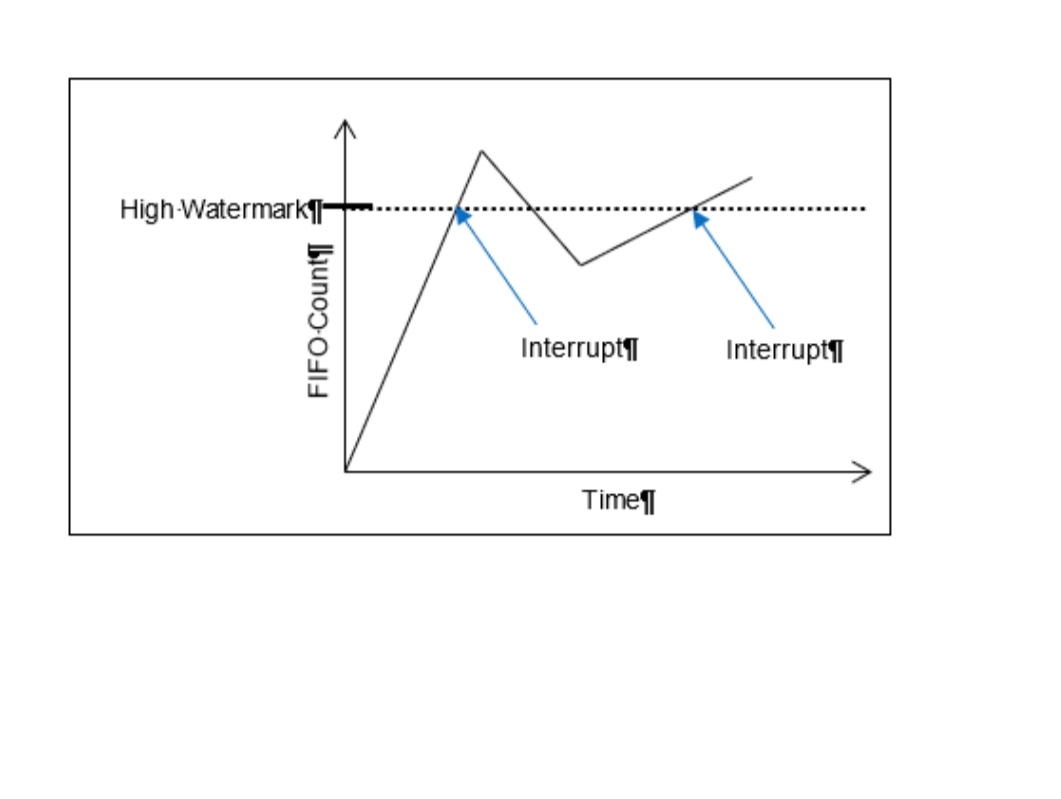
Shown below is an example of interrupts generated for the High Watermark. As shown, the interrupt is generated as the FIFO Word Count crosses the High Watermark. The interrupt will not be generated a second time until the count goes below the watermark and then above it again.
Interrupt Vector and Steering
When interrupts are enabled, the interrupt vector associated with the specific interrupt can be programmed (typically with a unique number/identifier) such that it can be utilized in the Interrupt Service Routine (ISR) to identify the type of interrupt. When an interrupt occurs, the contents of the Interrupt Vector registers is reported as part of the interrupt mechanism. In addition to specifying the interrupt vector, the interrupt can be directed (“steered”) to the native bus or to the application running on the onboard ARM processor.
Note
The Interrupt Vector and Interrupt Steering registers are mapped to the Motherboard Common Memory and these registers are associated with the Module Slot position (refer to Function Register Map).
Interrupt Vector Function: Set an identifier for the interrupt. Type: unsigned binary word (32-bit) Data Range: 0x0000 0000 to 0xFFFF FFFF Read/Write: R/W Initialized Value: 0 Operational Settings: When an interrupt occurs, this value is reported as part of the interrupt mechanism.
Interrupt Steering Function: Sets where to direct the interrupt. Type: unsigned binary word (32-bit) Data Range: See table Read/Write: R/W Initialized Value: 0 Operational Settings: When an interrupt occurs, the interrupt is sent as specified: Link to original
Direct Interrupt to VME 1 Direct Interrupt to ARM Processor (via SerDes)
(Custom App on ARM or NAI Ethernet Listener App)2 Direct Interrupt to PCIe Bus 5 Direct Interrupt to cPCI Bus 6
FUNCTION REGISTER MAP
Key: Bold Italic = Configuration/Control
**Bold Underline = Measurement/Status**
*When an event is detected, the bit associated with the event is set in this register and will remain set until the user clears the event bit. Clearing the bit requires writing a 1 back to the specific bit that was set when read (i.e. write-1-to-clear, writing a ‘1’ to a bit set to ‘1’ will set the bit to ‘0’).
- Data is available in Floating Point if Enable Floating Point Mode register is set to Floating Point Mode. ~ Data is always in Floating Point.
D/A Output Registers
| 0x2004 | DAC Value Ch 1** | R/W |
|---|---|---|
| 0x2104 | DAC Value Ch 2** | R/W |
| 0x2204 | DAC Value Ch 3** | R/W |
| 0x2304 | DAC Value Ch 4** | R/W |
D/A Control Registers
| 0x2000 | Voltage Range Ch 1 | R/W |
|---|---|---|
| 0x2100 | Voltage Range Ch 2 | R/W |
| 0x2200 | Voltage Range Ch 3 | R/W |
| 0x2300 | Voltage Range Ch 4 | R/W |
| 0x0250 | Power Enable Ch 1-4 | R/W |
|---|
| 0x100C | Update Rate Ch 1-4 | R/W |
|---|
| 0x1010 | Overcurrent Reset Ch 1-4 | R/W |
|---|
| 0x2048 | Overcurrent Value Ch 1 | R/W |
|---|---|---|
| 0x2148 | Overcurrent Value Ch 2 | R/W |
| 0x2248 | Overcurrent Value Ch 3 | R/W |
| 0x2348 | Overcurrent Value Ch 4 | R/W |
D/A Measurement Registers
| 0x2008 | Wrap Voltage Ch 1** | R |
|---|---|---|
| 0x2108 | Wrap Voltage Ch 2** | R |
| 0x2208 | Wrap Voltage Ch 3** | R |
| 0x2308 | Wrap Voltage Ch 4** | R |
| 0x200C | Wrap Current Ch 1** | R |
|---|---|---|
| 0x210C | Wrap Current Ch 2** | R |
| 0x220C | Wrap Current Ch 3** | R |
| 0x230C | Wrap Current Ch 4** | R |
FIFO/RAM Registers
| 0x1004 | Data Mode Ch 1-4 | R/W |
|---|---|---|
| 0x1008 | RAM/FIFO Mode Ch 1-4 | R/W |
FIFO Registers
| 0x2018 | FIFO Buffer Data Ch 1** | W |
|---|---|---|
| 0x2118 | FIFO Buffer Data Ch 2** | W |
| 0x2218 | FIFO Buffer Data Ch 3** | W |
| 0x2318 | FIFO Buffer Data Ch 4** | W |
| 0x201C | FIFO Word Count Ch 1 | R |
|---|---|---|
| 0x211C | FIFO Word Count Ch 2 | R |
| 0x221C | FIFO Word Count Ch 3 | R |
| 0x231C | FIFO Word Count Ch 4 | R |
FIFO Thresholds
| 0x2010 | Clear FIFO Ch 1 | W |
|---|---|---|
| 0x2110 | Clear FIFO Ch 2 | W |
| 0x2210 | Clear FIFO Ch 3 | W |
| 0x2310 | Clear FIFO Ch 4 | W |
| 0x2014 | FIFO Software Trigger Ch 1 | W |
|---|---|---|
| 0x2114 | FIFO Software Trigger Ch 2 | W |
| 0x2214 | FIFO Software Trigger Ch 3 | W |
| 0x2314 | FIFO Software Trigger Ch 4 | W |
| 0x2020 | FIFO Almost Empty Value Ch 1 | R/W |
|---|---|---|
| 0x2120 | FIFO Almost Empty Value Ch 2 | R/W |
| 0x2220 | FIFO Almost Empty Value Ch 3 | R/W |
| 0x2320 | FIFO Almost Empty Value Ch 4 | R/W |
| 0x2024 | FIFO Low Watermark Value Ch 1 | R/W |
|---|---|---|
| 0x2124 | FIFO Low Watermark Value Ch 2 | R/W |
| 0x2224 | FIFO Low Watermark Value Ch 3 | R/W |
| 0x2324 | FIFO Low Watermark Value Ch 4 | R/W |
| 0x2028 | FIFO High Watermark Value Ch 1 | R/W |
|---|---|---|
| 0x2128 | FIFO High Watermark Value Ch 2 | R/W |
| 0x2228 | FIFO High Watermark Value Ch 3 | R/W |
| 0x2328 | FIFO High Watermark Value Ch 4 | R/W |
| 0x202C | FIFO Almost Full Value Ch 1 | R/W |
|---|---|---|
| 0x212C | FIFO Almost Full Value Ch 2 | R/W |
| 0x222C | FIFO Almost Full Value Ch 3 | R/W |
| 0x232C | FIFO Almost Full Value Ch 4 | R/W |
Pattern Registers
| 0x2030 | Pattern Control Ch 1 | R/W |
|---|---|---|
| 0x2130 | Pattern Control Ch 2 | R/W |
| 0x2230 | Pattern Control Ch 3 | R/W |
| 0x2330 | Pattern Control Ch 4 | R/W |
| 0x2034 | Pattern Start Address Ch 1 | R/W |
|---|---|---|
| 0x2134 | Pattern Start Address Ch 2 | R/W |
| 0x2234 | Pattern Start Address Ch 3 | R/W |
| 0x2334 | Pattern Start Address Ch 4 | R/W |
| 0x2038 | Pattern End Address Ch 1 | R/W |
|---|---|---|
| 0x2138 | Pattern End Address Ch 2 | R/W |
| 0x2238 | Pattern End Address Ch 3 | R/W |
| 0x2338 | Pattern End Address Ch 4 | R/W |
| 0x203C | Pattern Number of Cycles Ch 1 | R/W |
|---|---|---|
| 0x213C | Pattern Number of Cycles Ch 2 | R/W |
| 0x223C | Pattern Number of Cycles Ch 3 | R/W |
| 0x233C | Pattern Number of Cycles Ch 4 | R/W |
| 0x0002 0000 to 0x0003 FFFC | Pattern RAM Data Space Ch 1** | W |
|---|---|---|
| 0x0004 0000 to 0x0005 FFFC | Pattern RAM Data Space Ch 2** | W |
| 0x0006 0000 to 0x0007 FFFC | Pattern RAM Data Space Ch 3** | W |
| 0x0008 0000 to 0x0009 FFFC | Pattern RAM Data Space Ch 4** | W |
Engineering Scaling Conversion Registers
| 0x02B4 | Enable Floating Point | R/W |
|---|---|---|
| 0x0264 | Floating Point State | R |
| 0x2050 | Floating Point Offset Ch 1~ | R/W |
|---|---|---|
| 0x2150 | Floating Point Offset Ch 2~ | R/W |
| 0x2250 | Floating Point Offset Ch 3~ | R/W |
| 0x2350 | Floating Point Offset Ch 4~ | R/W |
| 0x2050 | Floating Point Offset Ch 1~ | R/W |
|---|---|---|
| 0x2150 | Floating Point Offset Ch 2~ | R/W |
| 0x2250 | Floating Point Offset Ch 3~ | R/W |
| 0x2350 | Floating Point Offset Ch 4~ | R/W |
Watchdog Timer Registers
The D/A Modules provide registers that support Watchdog Timer capability. Refer to “Watchdog Timer Module Manual” for the Watchdog Timer Function Register Map.
Status Registers
| 0x02B0 | Channel Status Enabled | R/W |
|---|
BIT Status
| 0x0800 | Dynamic Status | R |
|---|---|---|
| 0x0804 | Latched Status* | R/W |
| 0x0808 Interrupt Enable | R/W | 0x080C |
| Set Edge/Level Interrupt | R/W |
D/A Test Registers
| 0x0248 | Test Enabled | R/W |
|---|
Background BIT Threshold Registers
| 0x02B8 | Background BIT Threshold | R/W |
|---|---|---|
| 0x02BC | Reset BIT | W |
| 0x02AC | Power-on BIT Complete++ | R |
|---|
++After power-on, Power-on BIT Complete should be checked before reading the BIT Latched Status.
Status Registers
Overcurrent Status
| 0x0910 | Dynamic Status | R |
|---|---|---|
| 0x0914 | Latched Status* | R/W |
| 0x0918 | Interrupt Enable | R/W |
| 0x091C | Set Edge/Level Interrupt | R/W |
External Power Under Voltage
| 0x0930 | Dynamic Status | R |
|---|---|---|
| 0x0934 | Latched Status* | R/W |
| 0x0939 | Interrupt Enable | R/W |
| 0x093C | Set Edge/Level Interrupt | R/W |
Watchdog Timer Fault/Inter-FPGA Failure
| 0x09B0 | Dynamic Status | R |
|---|---|---|
| 0x09B4 | Latched Status* | R/W |
| 0x09B8 | Interrupt Enable | R/W |
| 0x09BC | Set Edge/Level Interrupt | R/W |
Summary Status
| 0x09A0 | Dynamic Status | R |
|---|---|---|
| 0x09A4 | Latched Status* | R/W |
| 0x09A8 | Interrupt Enable | R/W |
| 0x09AC | Set Edge/Level Interrupt | R/W |
FIFO Status
| Ch 1 | ||
|---|---|---|
| 0x0810 | Dynamic Status | R |
| 0x0814 | Latched Status* | R/W |
| 0x0818 | Interrupt Enable | R/W |
| 0x081C | Set Edge/Level Interrupt | R/W |
| Ch 2 | ||
| 0x0820 | Dynamic Status | R |
| 0x0824 | Latched Status* | R/W |
| 0x0828 | Interrupt Enable | R/W |
| 0x082C | Set Edge/Level Interrupt | R/W |
| Ch 3 | 0x0830 | |
| Dynamic Status | R | 0x0834 |
| Latched Status* | R/W | 0x0838 |
| Interrupt Enable | R/W | 0x083C |
| Set Edge/Level Interrupt | R/W | Ch 4 |
| 0x0840 | Dynamic Status | R |
| 0x0844 | Latched Status* | R/W |
| 0x0848 | Interrupt Enable | R/W |
| 0x084C | Set Edge/Level Interrupt | R/W |
Interrupt Registers
The Interrupt Vector and Interrupt Steering registers are located on the Motherboard Memory Space and do not require any Module Address Offsets. These registers are accessed using the absolute addresses listed in the table below.
| 0x0500 | Module 1 Interrupt Vector 1 - BIT | R/W |
|---|---|---|
| 0x0504 | Module 1 Interrupt Vectors 2 - FIFO Ch 1 | R/W |
| 0x0508 | Module 1 Interrupt Vector 3 - FIFO Ch 2 | R/W |
| 0x050C | Module 1 Interrupt Vector 4 - FIFO Ch 3 | R/W |
| 0x0510 | Module 1 Interrupt Vector 5 - FIFO Ch 4 | R/W |
| 0x0514 to 0x0540 | Module 1 Interrupt Vector 6-17 - Reserved R/W | 0x0544 |
| Module 1 Interrupt Vector 18 - Overcurrent | R/W | 0x0548 |
| Module 1 Interrupt Vector 19 - Reserved | R/W | 0x054C |
| Module 1 Interrupt Vector 20 – External Power Under Voltage | R/W | 0x0550 to 0x0564 |
| Module 1 Interrupt Vector 21-26 - Reserved | R/W | 0x0568 |
| Module 1 Interrupt Vector 27 - Summary | R/W | 0x056C |
| Module 1 Interrupt Vector 28 – Watchdog Timer/Inter-FPGA | R/W | 0x0570 to 0x057C |
| Module 1 Interrupt Vector 29-32 - Reserved | R/W |
| 0x0600 | Module 1 Interrupt Steering 1 - BIT | R/W |
|---|---|---|
| 0x0604 | Module 1 Interrupt Steering 2 - FIFO Ch 1 | R/W |
| 0x0608 | Module 1 Interrupt Steering 3 - FIFO Ch 2 | R/W |
| 0x060C | Module 1 Interrupt Steering 4 - FIFO Ch 3 | R/W |
| 0x0610 | Module 1 Interrupt Steering 5 - FIFO Ch 4 | R/W |
| 0x0614 to 0x0640 | Module 1 Interrupt Steering 6-17 - Reserved | R/W |
| 0x0644 | Module 1 Interrupt Steering 18 - Overcurrent | R/W |
| 0x0648 | Module 1 Interrupt Steering 19 - Reserved | R/W |
| 0x064C | Module 1 Interrupt Steering 20 – External Power Under Voltage | R/W |
| 0x0650 to 0x0664 | Module 1 Interrupt Steering 21-26 - Reserved | R/W |
| 0x0668 | Module 1 Interrupt Steering 27 - Summary | R/W |
| 0x066C | Module 1 Interrupt Steering 28 – Watchdog Timer/Inter-FPGA | R/W |
| 0x0670 to 0x067C | Module 1 Interrupt Steering 29-32 - Reserved | R/W |
| 0x0700 | Module 2 Interrupt Vector 1 - BIT | R/W |
|---|---|---|
| 0x0704 | Module 2 Interrupt Vectors 2 - FIFO Ch 1 | R/W |
| 0x0708 | Module 2 Interrupt Vector 3 - FIFO Ch 2 | R/W |
| 0x070C | Module 2 Interrupt Vector 4 - FIFO Ch 3 | R/W |
| 0x0710 | Module 2 Interrupt Vector 5 - FIFO Ch 4 | R/W |
| 0x0714 to 0x0740 | Module 2 Interrupt Vector 6-17 - Reserved R/W | 0x0744 |
| Module 2 Interrupt Vector 18 - Overcurrent | R/W | 0x0748 |
| Module 2 Interrupt Vector 19 - Reserved | R/W | 0x074C |
| Module 2 Interrupt Vector 20 – External Power Under Voltage | R/W | 0x0750 to 0x0764 |
| Module 2 Interrupt Vector 21-26 - Reserved | R/W | 0x0768 |
| Module 2 Interrupt Vector 27 - Summary | R/W | 0x076C |
| Module 2 Interrupt Vector 28 – Watchdog Timer/Inter-FPGA | R/W | 0x0770 to 0x077C |
| Module 2 Interrupt Vector 29-32 - Reserved | R/W |
| 0x0800 | Module 2 Interrupt Steering 1 - BIT | R/W |
|---|---|---|
| 0x0804 | Module 2 Interrupt Steering 2 - FIFO Ch 1 | R/W |
| 0x0808 | Module 2 Interrupt Steering 3 - FIFO Ch 2 | R/W |
| 0x080C | Module 2 Interrupt Steering 4 - FIFO Ch 3 | R/W |
| 0x0810 | Module 2 Interrupt Steering 5 - FIFO Ch 4 | R/W |
| 0x0814 to 0x0840 | Module 2 Interrupt Steering 6-17 - Reserved | R/W |
| 0x0844 | Module 2 Interrupt Steering 18 - Overcurrent | R/W |
| 0x0848 | Module 2 Interrupt Steering 19 - Reserved | R/W |
| 0x084C | Module 2 Interrupt Steering 20 – External Power Under Voltage | R/W |
| 0x0850 to 0x0864 | Module 2 Interrupt Steering 21-26 - Reserved | R/W |
| 0x0868 | Module 2 Interrupt Steering 27 - Summary | R/W |
| 0x086C | Module 2 Interrupt Steering 28 – Watchdog Timer/Inter-FPGA | R/W |
| 0x0870 to 0x087C | Module 2 Interrupt Steering 29-32 - Reserved | R/W |
| 0x0900 | Module 3 Interrupt Vector 1 - BIT | R/W |
|---|---|---|
| 0x0904 | Module 3 Interrupt Vectors 2 - FIFO Ch 1 | R/W |
| 0x0908 | Module 3 Interrupt Vector 3 - FIFO Ch 2 | R/W |
| 0x090C | Module 3 Interrupt Vector 4 - FIFO Ch 3 | R/W |
| 0x0910 | Module 3 Interrupt Vector 5 - FIFO Ch 4 | R/W |
| 0x0914 to 0x0940 | Module 3 Interrupt Vector 6-17 - Reserved R/W | 0x0944 |
| Module 3 Interrupt Vector 18 - Overcurrent | R/W | 0x0948 |
| Module 3 Interrupt Vector 19 - Reserved | R/W | 0x094C |
| Module 3 Interrupt Vector 20 – External Power Under Voltage | R/W | 0x0950 to 0x0964 |
| Module 3 Interrupt Vector 21-26 - Reserved | R/W | 0x0968 |
| Module 3 Interrupt Vector 27 - Summary | R/W | 0x096C |
| Module 3 Interrupt Vector 28 – Watchdog Timer/Inter-FPGA | R/W | 0x0970 to 0x097C |
| Module 3 Interrupt Vector 29-32 - Reserved | R/W |
| 0x0A00 | Module 3 Interrupt Steering 1 - BIT | R/W |
|---|---|---|
| 0x0A04 | Module 3 Interrupt Steering 2 - FIFO Ch 1 | R/W |
| 0x0A08 | Module 3 Interrupt Steering 3 - FIFO Ch 2 | R/W |
| 0x0A0C | Module 3 Interrupt Steering 4 - FIFO Ch 3 | R/W |
| 0x0A10 | Module 3 Interrupt Steering 5 - FIFO Ch 4 | R/W |
| 0x0A14 to 0x0840 | Module 3 Interrupt Steering 6-17 - Reserved | R/W |
| 0x0A44 | Module 3 Interrupt Steering 18 - Overcurrent | R/W |
| 0x0A48 | Module 3 Interrupt Steering 19 - Reserved | R/W |
| 0x0A4C | Module 3 Interrupt Steering 20 – External Power Under Voltage | R/W |
| 0x0A50 to 0x0A64 | Module 3 Interrupt Steering 21-26 - Reserved | R/W |
| 0x0A68 | Module 3 Interrupt Steering 27 - Summary | R/W |
| 0x0A6C | Module 3 Interrupt Steering 28 – Watchdog Timer/Inter-FPGA | R/W |
| 0x0A70 to 0x0A7C | Module 3 Interrupt Steering 29-32 - Reserved | R/W |
| 0x0B00 | Module 4 Interrupt Vector 1 - BIT | R/W |
|---|---|---|
| 0x0B04 | Module 4 Interrupt Vectors 2 - FIFO Ch 1 | R/W |
| 0x0B08 | Module 4 Interrupt Vector 3 - FIFO Ch 2 | R/W |
| 0x0B0C | Module 4 Interrupt Vector 4 - FIFO Ch 3 | R/W |
| 0x0B10 | Module 4 Interrupt Vector 5 - FIFO Ch 4 | R/W |
| 0x0B14 to 0x0B40 | Module 4 Interrupt Vector 6-17 - Reserved R/W | 0x0B44 |
| Module 4 Interrupt Vector 18 - Overcurrent | R/W | 0x0B48 |
| Module 4 Interrupt Vector 19 - Reserved | R/W | 0x0B4C |
| Module 4 Interrupt Vector 20 – External Power Under Voltage | R/W | 0x0B50 to 0x0B64 |
| Module 4 Interrupt Vector 21-26 - Reserved | R/W | 0x0B68 |
| Module 4 Interrupt Vector 27 - Summary | R/W | 0x0B6C |
| Module 4 Interrupt Vector 28 – Watchdog Timer/Inter-FPGA | R/W | 0x0B70 to 0x0B7C |
| Module 4 Interrupt Vector 29-32 - Reserved | R/W |
| 0x0C00 | Module 4 Interrupt Steering 1 - BIT | R/W |
|---|---|---|
| 0x0C04 | Module 4 Interrupt Steering 2 - FIFO Ch 1 | R/W |
| 0x0C08 | Module 4 Interrupt Steering 3 - FIFO Ch 2 | R/W |
| 0x0C0C | Module 4 Interrupt Steering 4 - FIFO Ch 3 | R/W |
| 0x0C10 | Module 4 Interrupt Steering 5 - FIFO Ch 4 | R/W |
| 0x0C14 to 0x0C40 | Module 4 Interrupt Steering 6-17 - Reserved | R/W |
| 0x0C44 | Module 4 Interrupt Steering 18 - Overcurrent | R/W |
| 0x0C48 | Module 4 Interrupt Steering 19 - Reserved | R/W |
| 0x0C4C | Module 4 Interrupt Steering 20 – External Power Under Voltage | R/W |
| 0x0C50 to 0x0C64 | Module 4 Interrupt Steering 21-26 - Reserved | R/W |
| 0x0C68 | Module 4 Interrupt Steering 27 - Summary | R/W |
| 0x0C6C | Module 4 Interrupt Steering 28 – Watchdog Timer/Inter-FPGA | R/W |
| 0x0C70 to 0x0C7C | Module 4 Interrupt Steering 29-32 - Reserved | R/W |
| 0x0D00 | Module 5 Interrupt Vector 1 - BIT | R/W |
|---|---|---|
| 0x0D04 | Module 5 Interrupt Vectors 2 - FIFO Ch 1 | R/W |
| 0x0D08 | Module 5 Interrupt Vector 3 - FIFO Ch 2 | R/W |
| 0x0D0C | Module 5 Interrupt Vector 4 - FIFO Ch 3 | R/W |
| 0x0D10 | Module 5 Interrupt Vector 5 - FIFO Ch 4 | R/W |
| 0x0D14 to 0x0D40 | Module 5 Interrupt Vector 6-17 - Reserved R/W | 0x0D44 |
| Module 5 Interrupt Vector 18 - Overcurrent | R/W | 0x0D48 |
| Module 5 Interrupt Vector 19 - Reserved | R/W | 0x0D4C |
| Module 5 Interrupt Vector 20 – External Power Under Voltage | R/W | 0x0D50 to 0x0D64 |
| Module 5 Interrupt Vector 21-26 - Reserved | R/W | 0x0D68 |
| Module 5 Interrupt Vector 27 - Summary | R/W | 0x0D6C |
| Module 5 Interrupt Vector 28 – Watchdog Timer/Inter-FPGA | R/W | 0x0D70 to 0x0D7C |
| Module 5 Interrupt Vector 29-32 - Reserved | R/W |
| 0x0E00 | Module 5 Interrupt Steering 1 - BIT | R/W |
|---|---|---|
| 0x0E04 | Module 5 Interrupt Steering 2 - FIFO Ch 1 | R/W |
| 0x0E08 | Module 5 Interrupt Steering 3 - FIFO Ch 2 | R/W |
| 0x0E0C | Module 5 Interrupt Steering 4 - FIFO Ch 3 | R/W |
| 0x0E10 | Module 5 Interrupt Steering 5 - FIFO Ch 4 | R/W |
| 0x0E14 to 0x0E40 | Module 5 Interrupt Steering 6-17 - Reserved | R/W |
| 0x0E44 | Module 5 Interrupt Steering 18 - Overcurrent | R/W |
| 0x0E48 | Module 5 Interrupt Steering 19 - Reserved | R/W |
| 0x0E4C | Module 5 Interrupt Steering 20 – External Power Under Voltage | R/W |
| 0x0E50 to 0x0E64 | Module 5 Interrupt Steering 21-26 - Reserved | R/W |
| 0x0E68 | Module 5 Interrupt Steering 27 - Summary | R/W |
| 0x0E6C | Module 5 Interrupt Steering 28 – Watchdog Timer/Inter-FPGA | R/W |
| 0x0E70 to 0x0E7C | Module 4 Interrupt Steering 29-32 - Reserved | R/W |
| 0x0F00 | Module F Interrupt Vector 1 - BIT | R/W |
|---|---|---|
| 0x0F04 | Module F Interrupt Vectors 2 - FIFO Ch 1 | R/W |
| 0x0F08 | Module F Interrupt Vector 3 - FIFO Ch 2 | R/W |
| 0x0F0C | Module F Interrupt Vector 4 - FIFO Ch 3 | R/W |
| 0x0F10 | Module F Interrupt Vector 5 - FIFO Ch 4 | R/W |
| 0x0F14 to 0x0F40 | Module F Interrupt Vector 6-17 - Reserved R/W | 0x0F44 |
| Module 6 Interrupt Vector 18 - Overcurrent | R/W | 0x0F48 |
| Module 6 Interrupt Vector 19 - Reserved | R/W | 0x0F4C |
| Module 6 Interrupt Vector 20 – External Power Under Voltage | R/W | 0x0F50 to 0x0F64 |
| Module 6 Interrupt Vector 21-26 - Reserved | R/W | 0x0F68 |
| Module 6 Interrupt Vector 27 - Summary | R/W | 0x0F6C |
| Module 6 Interrupt Vector 28 – Watchdog Timer/Inter-FPGA | R/W | 0x0F70 to 0x0F7C |
| Module 6 Interrupt Vector 29-32 - Reserved | R/W |
| 0x1000 | Module 6 Interrupt Steering 1 - BIT | R/W |
|---|---|---|
| 0x1004 | Module 6 Interrupt Steering 2 - FIFO Ch 1 | R/W |
| 0x1008 | Module 6 Interrupt Steering 3 - FIFO Ch 2 | R/W |
| 0x100C | Module 6 Interrupt Steering 4 - FIFO Ch 3 | R/W |
| 0x1010 | Module 6 Interrupt Steering 5 - FIFO Ch 4 | R/W |
| 0x1014 to 0x1040 | Module 6 Interrupt Steering 6-17 - Reserved | R/W |
| 0x1044 | Module 6 Interrupt Steering 18 - Overcurrent | R/W |
| 0x1048 | Module 6 Interrupt Steering 19 - Reserved | R/W |
| 0x104C | Module 6 Interrupt Steering 20 – External Power Under Voltage | R/W |
| 0x1050 to 0x1064 | Module 6 Interrupt Steering 21-26 - Reserved | R/W |
| 0x1068 | Module 6 Interrupt Steering 27 - Summary | R/W |
| 0x106C | Module 6 Interrupt Steering 28 – Watchdog Timer/Inter-FPGA | R/W |
| 0x1070 to 0x107C | Module 6 Interrupt Steering 29-32 - Reserved | R/W |
STATUSandINTERRUPTSboilerplate1234
moduleWatchdogBoilerplate123
interruptVectorAndSteeringBoilerplate1234
User Watchdog Timer Registers
| 0x01C0 | UWDT Quiet Time | R/W |
|---|---|---|
| 0x01C4 | UWDT Window | R/W |
| 0x01C8 | UWDT Strobe | W |
Status Registers
User Watchdog Timer Fault/Inter-FPGA Failure
| 0x09B0 | Dynamic Status | R |
|---|---|---|
| 0x09B4 | Latched Status* | R/W |
| 0x09B8 | Interrupt Enable | R/W |
| 0x09BC | Set Edge/Level Interrupt | R/W |
Interrupt Register
The Interrupt Vector and Interrupt Steering registers are mapped to the Motherboard Memory Space and these addresses are absolute based on the module slot position. In other words, do not apply the Module Address offset to these addresses.
| 0x056C | Module 1 Interrupt Vector 28 – User Watchdog Timer Fault/Inter-FPGA Failure | R/W |
|---|---|---|
| 0x076C | Module 1 Interrupt Vector 28 – User Watchdog Timer Fault/Inter-FPGA Failure | R/W |
| 0x096C | Module 3 Interrupt Vector 28 – User Watchdog Timer Fault/Inter-FPGA Failure | R/W |
| 0x0B6C | Module 4 Interrupt Vector 28 – User Watchdog Timer Fault/Inter-FPGA Failure | R/W |
| 0x0D6C | Module 5 Interrupt Vector 28 – User Watchdog Timer Fault/Inter-FPGA Failure | R/W |
| 0x0F6C | Module 6 Interrupt Vector 28 – User Watchdog Timer Fault/Inter-FPGA Failure | R/W |
| 0x066C | Module 1 Interrupt Steering 28 – User Watchdog Timer Fault/Inter-FPGA Failure | R/W |
| 0x086C | Module 2 Interrupt Steering 28 – User Watchdog Timer Fault/Inter-FPGA Failure | R/W |
| 0x0A6C | Module 3 Interrupt Steering 28 – User Watchdog Timer Fault/Inter-FPGA Failure | R/W |
| 0x0C6C | Module 4 Interrupt Steering 28 – User Watchdog Timer Fault/Inter-FPGA Failure | R/W |
| 0x0E6C | Module 5 Interrupt Steering 28 – User Watchdog Timer Fault/Inter-FPGA Failure | R/W |
| 0x106C | Module 6 Interrupt Steering 28 – User Watchdog Timer Fault/Inter-FPGA Failure | R/W |
APPENDIX A: INTEGER/FLOATING POINT MODE PROGRAMMING
Integer Mode Programming
The following registers should be configured as follows:
| Register | Value | Description |
|---|---|---|
| Voltage Range | 0x3 | ±50 volts |
| Enable Floating Point | 0 | Disable for Floating Point Mode |
Note: LSB for Bipolar ±50-volt range:
LSB = 40/0x00007FFF = 40/32767=1525uV
| DAC Value (volts) (Floating Point) | DAC Value (Calculated by Module) | DAC Value (Integer) | DAC Voltage Output |
|---|---|---|---|
| 50.0 | (50.0 + 0.0) * 0.02 = 1 (FS) | FS = 0x0000 7FFF | 32767 * LSB = 50.0 volts |
| 25.0 | (25.0 + 0.0) * 0.02 = 0.5 of FS | 0.5 of FS = 0x0000 4000 | 16384 * LSB = 25.0 volts |
| 0.0 | (0.0 + 0.0) * 0.02 = 0.0 of FS | 0.0 of FS = 0x0000 0000 | 0 * LSB = 0.0 volts |
| -25.0 | (-25.0 + 0.0) * 0.02 = -0.5 of FS | -0.5 of FS = 0xFFFF C000 | -16384 * LSB = -25.0 volts |
| -50.0 | (-50.0 + 0.0) * 0.02 = -1 (-FS) | -1.0 of FS = 0xFFFF 8000 | -32768 * LSB = -50.0 volts |
| DAC Value (Integer) | DAC Voltage Output |
|---|---|
| 1.000 of FS = 0x0000 7FFF | 32767 * LSB = 50.0 volts |
| 0.5 of FS = 0x0000 4000 | 16384 * LSB = 25.0 volts |
| 0.0 of FS = 0x0000 0000 | 0 * LSB = 0.0 volts |
| -0.5 of FS = 0xFFFF C000 | -16384 * LSB = -25.0 volts |
| -1.0 of FS = 0xFFFF 8000 | -32768 * LSB = -50.0 volts |
Floating Point Mode Voltage Programming
The following registers should be configured as follows:
| Register | Value | Description |
|---|---|---|
| Voltage Range | 0x3 | ±50 volts |
| Enable Floating Point | 1 | Enable for Floating Point Mode |
| Floating Point Scale | 0.05 | Scale = 1 / (Full Range) = 1 / 50.0 = 0.02 |
| Floating Point Offset | 0.0 | No Offset |
Note: LSB for Bipolar ±50-volt range:
LSB = 50/0x00007FFF
LSB = 50/32767=1525uV
Floating Point Mode Engineering Units Programming
Example #1:
An application wants to associate -50 to 50 volts to -5 to 5 inches.
The following registers should be configured as follows:
| Register | Value | Description |
|---|---|---|
| Voltage Range | 0x3 | ±50 volts |
| Enable Floating Point | 1 | Enable for Floating Point Mode |
| Floating Point Scale | 0.2 | Scale = 1 / inches range = 1 / 5 inches = 0.2 |
| Floating Point Offset | 0.0 | No Offset |
Note: LSB for Bipolar ±50-volt range:
LSB = 50/0x00007FFF
LSB = 50/32767=1220uV
| DAC Value (in) (Floating Point) | DAC Value (Calculated by Module) | DAC Value (Integer) | DAC Voltage Output |
|---|---|---|---|
| 5.0 | (5.0 + 0.0) * 0.2 = 1 (FS) | FS = 0x0000 7FFF | 32767 * LSB = 50.0 volts |
| 2.5 | (2.5 + 0.0) * 0.2 = 0.5 FS | 0.5 of FS = 0x0000 4000 | 16384 * LSB = 25.0 volts |
| 0.0 | (0.0 + 0.0) * 0.2 = 0.0 FS | 0.0 of FS = 0x0000 0000 | 0 * LSB = 0.0 volts |
| -2.5 | (-2.5 + 0.0) * 0.2 = -0.5 FS | -0.5 of FS = 0xFFFF C000 | -16384 * LSB = -25.0 volts |
| -5.0 | (-5.0 + 0.0) * 0.2 = -1 (-FS) | -FS = 0xFFFF 8000 | -32768 * LSB = -50.0 volts |
Example #2:
An application wants to associate 0 to 50 volts to 0 to 50 feet with a bias of 0.5 feet (in other words 0.5 feet is equivalent to 0 volts).
The following registers should be configured as follows:
| Register | Value | Description |
|---|---|---|
| Voltage Range | 0x0 | Unipolar 0-50 volts |
| Enable Floating Point | 1 | Enable for Floating Point Mode |
| Floating Point Scale | 0.02 | Scale = 1 / feet range = 1 / 50 = 0.02 |
| Floating Point Offset | -0.50 | Bias (0.5 feet) that is equivalent to 0 volts |
The following are sample outputs:
Note: LSB for Unipolar 50-volt range:
LSB = 50/0x0000FFFF
LSB = 50/65535=763uV
| DAC Value (in) (Floating Point) | DAC Value (Calculated by Module) | DAC Value (Integer) | DAC Voltage Output |
|---|---|---|---|
| 50.00 | (50.00 - 0.50) * 0.02 = 0.99 of FS | 0.99 of FS = 0x0000 FD70 | 64880 * LSB = 49.50 volts |
| 25.00 | (25.00 - 0.50) * 0.02 = 0.49 of FS | 0.49 of FS = 0x0000 7D70 | 32112 * LSB = 24.50 volts |
| 5.50 | (5.50 - 0.50) * 0.02 = 0.10 of FS | 0.10 of FS = 0x0000 199A | 6554 * LSB = 5.00 volts |
| 0.50 | v(0.50 - 0.50) * 0.02 = 0.00 of FS | 0.00 of FS = 0x0000 0000 | 0 * LSB = 0.0 volts |
APPENDIX B: PIN-OUT DETAILS
Pin-out details (for reference) are shown below, with respect to DATAIO. Additional information on pin-outs can be found in the Motherboard Operational Manuals.
| Module Signal (Ref Only) | 44-Pin I/O | 50-Pin I/O (Mod Slot 1-J3) | 50-Pin I/O (Mod Slot 2-J4) | 50-Pin I/O (Mod Slot 3-J3) | 50-Pin I/O (Mod Slot 3-J4) | DA-HI-VOLT (DA4) |
|---|---|---|---|---|---|---|
| DATIO1 | 2 | 10 | 1 | 2 | ||
| DATIO2 | 24 | 35 | 26 | 27 | ||
| DATIO3 | 3 | 11 | 2 | 3 | SENSE-H_CH1 | |
| DATIO4 | 25 | 36 | 27 | 28 | SENSE-L_CH1 | |
| DATIO5 | 5 | 13 | 4 | 5 | OUT-H_CH1 | |
| DATIO6 | 27 | 38 | 29 | 30 | OUT-L_CH1 | |
| DATIO7 | 7 | 14 | 5 | 6 | EXT-SYNC_P* | |
| DATIO8 | 29 | 39 | 30 | 31 | EXT-SYNC_N* | |
| DATIO9 | 8 | 15 | 6 | 7 | SENSE-H_CH2 | |
| DATIO10 | 30 | 40 | 31 | 32 | SENSE-L_CH2 | |
| DATIO11 | 10 | 17 | 8 | 9 | OUT-H_CH2 | |
| DATIO12 | 32 | 42 | 33 | 34 | OUT-L_CH2 | |
| DATIO13 | 12 | 18 | 9 | 17 | ||
| DATIO14 | 34 | 43 | 34 | 42 | ||
| DATIO15 | 13 | 19 | 10 | 18 | SENSE-H_CH3 | |
| DATIO16 | 35 | 44 | 35 | 43 | SENSE-L_CH3 | |
| DATIO17 | 15 | 21 | 12 | 20 | OUT-H_CH3 | |
| DATIO18 | 37 | 46 | 37 | 45 | OUT-L_CH3 | |
| DATIO19 | 17 | 22 | 13 | 21 | ||
| DATIO20 | 39 | 47 | 38 | 46 | ||
| DATIO21 | 18 | 23 | 14 | 22 | SENSE-H_CH4 | |
| DATIO22 | 40 | 48 | 39 | 47 | SENSE-L_CH4 | |
| DATIO23 | 20 | 25 | 16 | 24 | OUT-H_CH4 | |
| DATIO24 | 42 | 50 | 41 | 49 | OUT-L_CH4 | |
| DATIO25 | 4 | 12 | 3 | 4 | ||
| DATIO26 | 26 | 37 | 28 | 29 | ||
| DATIO27 | 9 | 16 | 7 | 8 | ||
| DATIO28 | 31 | 41 | 32 | 33 | ||
| DATIO29 | 14 | 20 | 11 | 19 | ||
| DATIO30 | 36 | 45 | 36 | 44 | ||
| DATIO31 | 19 | 24 | 15 | 23 | ||
| DATIO32 | 41 | 49 | 40 | 48 | ||
| DATIO33 | 6 | |||||
| DATIO34 | 28 | |||||
| DATIO35 | 11 | |||||
| DATIO36 | 33 | |||||
| DATIO37 | 16 | |||||
| DATIO38 | 38 | |||||
| DATIO39 | 21 | |||||
| DATIO40 | 43 | |||||
| N/A |
Notes
- Pending external clock/trigger mode feature – contact factory for application use and availability
STATUS AND INTERRUPTS
Status registers indicate the detection of faults or events. The status registers can be channel bit-mapped or event bit-mapped. An example of a channel bit-mapped register is the BIT status register, and an example of an event bit-mapped register is the FIFO status register.
For those status registers that allow interrupts to be generated upon the detection of the fault or the event, there are four registers associated with each status: Dynamic, Latched, Interrupt Enabled, and Set Edge/Level Interrupt.
Dynamic Status: The Dynamic Status register indicates the current condition of the fault or the event. If the fault or the event is momentary, the contents in this register will be clear when the fault or the event goes away. The Dynamic Status register can be polled, however, if the fault or the event is sporadic, it is possible for the indication of the fault or the event to be missed.
Latched Status: The Latched Status register indicates whether the fault or the event has occurred and keeps the state until it is cleared by the user. Reading the Latched Status register is a better alternative to polling the Dynamic Status register because the contents of this register will not clear until the user commands to clear the specific bit(s) associated with the fault or the event in the Latched Status register. Once the status register has been read, the act of writing a 1 back to the applicable status register to any specific bit (channel/event) location will “clear” the bit (set the bit to 0). When clearing the channel/event bits, it is strongly recommended to write back the same bit pattern as read from the Latched Status register. For example, if the channel bit-mapped Latched Status register contains the value 0x0000 0005, which indicates fault/event detection on channel 1 and 3, write the value 0x0000 0005 to the Latched Status register to clear the fault/event status for channel 1 and 3. Writing a “1” to other channels that are not set (example 0x0000 000F) may result in incorrectly “clearing” incoming faults/events for those channels (example, channel 2 and 4).
Interrupt Enable: If interrupts are preferred upon the detection of a fault or an event, enable the specific channel/event interrupt in the Interrupt Enable register. The bits in Interrupt Enable register map to the same bits in the Latched Status register. When a fault or event occurs, an interrupt will be fired. Subsequent interrupts will not trigger until the application acknowledges the fired interrupt by clearing the associated channel/event bit in the Latched Status register. If the interruptible condition is still persistent after clearing the bit, this may retrigger the interrupt depending on the Edge/Level setting.
Set Edge/Level Interrupt: When interrupts are enabled, the condition on retriggering the interrupt after the Latch Register is “cleared” can be specified as “edge” triggered or “level” triggered. Note, the Edge/Level Trigger also affects how the Latched Register value is adjusted after it is “cleared” (see below).
Edge triggered: An interrupt will be retriggered when the Latched Status register change from low (0) to high (1) state. Uses for edge-triggered interrupts would include transition detections (Low-to-High transitions, High-to-Low transitions) or fault detections. After “clearing” an interrupt, another interrupt will not occur until the next transition or the re-occurrence of the fault again.
Level triggered: An interrupt will be generated when the Latched Status register remains at the high (1) state. Level-triggered interrupts are used to indicate that something needs attention.
Interrupt Vector and Steering
When interrupts are enabled, the interrupt vector associated with the specific interrupt can be programmed with a unique number/identifier defined by the user such that it can be utilized in the Interrupt Service Routine (ISR) to identify the type of interrupt. When an interrupt occurs, the contents of the Interrupt Vector registers is reported as part of the interrupt mechanism. In addition to specifying the interrupt vector, the interrupt can be directed (“steered”) to the native bus or to the application running on the onboard ARM processor.
Interrupt Trigger Types
In most applications, limiting the number of interrupts generated is preferred as interrupts are costly, thus choosing the correct Edge/Level interrupt trigger to use is important.
Example 1: Fault detection
This example illustrates interrupt considerations when detecting a fault like an “open” on a line. When an “open” is detected, the system will receive an interrupt. If the “open” on the line is persistent and the trigger is set to “edge”, upon “clearing” the interrupt, the system will not regenerate another interrupt. If, instead, the trigger is set to “level”, upon “clearing” the interrupt, the system will re-generate another interrupt. Thus, in this case, it will be better to set the trigger type to “edge”.
Example 2: Threshold detection
This example illustrates interrupt considerations when detecting an event like reaching or exceeding the “high watermark” threshold value. In a communication device, when the number of elements received in the FIFO reaches the high-watermark threshold, an interrupt will be generated. Normally, the application would read the count of the number of elements in the FIFO and read this number of elements from the FIFO. After reading the FIFO data, the application would “clear” the interrupt. If the trigger type is set to “edge”, another interrupt will be generated only if the number of elements in FIFO goes below the “high watermark” after the “clearing” the interrupt and then fills up to reach the “high watermark” threshold value. Since receiving communication data is inherently asynchronous, it is possible that data can continue to fill the FIFO as the application is pulling data off the FIFO. If, at the time the interrupt is “cleared”, the number of elements in the FIFO is at or above the “high watermark”, no interrupts will be generated. In this case, it will be better to set the trigger type to “level”, as the purpose here is to make sure that the FIFO is serviced when the number of elements exceeds the high watermark threshold value. Thus, upon “clearing” the interrupt, if the number of elements in the FIFO is at or above the “high watermark” threshold value, another interrupt will be generated indicating that the FIFO needs to be serviced.
Dynamic and Latched Status Registers Examples
The examples in this section illustrate the differences in behavior of the Dynamic Status and Latched Status registers as well as the differences in behavior of Edge/Level Trigger when the Latched Status register is cleared.
Figure 1. Example of Module's Channel-Mapped Dynamic and Latched Status States
No Clearing of
Latched StatusClearing of Latched Status
(Edge-Triggered)Clearing of Latched Status
(Level-Triggered)Time Dynamic Status Latched Status Action Latched Status Action Latched T0 0x0 0x0 Read Latched Register 0x0 Read Latched Register 0x0 T1 0x1 0x1 Read Latched Register 0x1 0x1 T1 0x1 0x1 Write 0x1 to Latched Register Write 0x1 to Latched Register T1 0x1 0x1 0x0 0x1 T2 0x0 0x1 Read Latched Register 0x0 Read Latched Register 0x1 T2 0x0 0x1 Read Latched Register 0x0 Write 0x1 to Latched Register T2 0x0 0x1 Read Latched Register 0x0 0x0 T3 0x2 0x3 Read Latched Register 0x2 Read Latched Register 0x2 T3 0x2 0x3 Write 0x2 to Latched Register Write 0x2 to Latched Register T3 0x2 0x3 0x0 0x2 T4 0x2 0x3 Read Latched Register 0x1 Read Latched Register 0x3 T4 0x2 0x3 Write 0x1 to Latched Register Write 0x3 to Latched Register T4 0x2 0x3 0x0 0x2 T5 0xC 0xF Read Latched Register 0xC Read Latched Register 0xE T5 0xC 0xF Write 0xC to Latched Register Write 0xE to Latched Register T5 0xC 0xF 0x0 0xC T6 0xC 0xF Read Latched Register 0x0 Read Latched 0xC T6 0xC 0xF Read Latched Register 0x0 Write 0xC to Latched Register T6 0xC 0xF Read Latched Register 0x0 0xC T7 0x4 0xF Read Latched Register 0x0 Read Latched Register 0xC T7 0x4 0xF Read Latched Register 0x0 Write 0xC to Latched Register T7 0x4 0xF Read Latched Register 0x0 0x4 T8 0x4 0xF Read Latched Register 0x0 Read Latched Register 0x4 Interrupt Examples
The examples in this section illustrate the interrupt behavior with Edge/Level Trigger.
Figure 2. Illustration of Latched Status State for Module with 4-Channels with Interrupt Enabled
Time Latched Status
(Edge-Triggered -
Clear Multi-Channel)Latched Status
(Edge-Triggered -
Clear Single Channel)Latched Status
(Level-Triggered -
Clear Multi-Channel)Action Latched Action Latched Action Latched T1
(Int 1)Interrupt Generated
Read Latched Registers0x1 Interrupt Generated
Read Latched Registers0x1 Interrupt Generated
Read Latched Registers0x1 T1
(Int 1)Write 0x1 to Latched Register Write 0x1 to Latched Register Write 0x1 to Latched Register T1
(Int 1)0x0 0x0 Interrupt re-triggers
Note, interrupt re-triggers after
each clear until T2.0x1 T3
(Int 2)Interrupt Generated
Read Latched Registers0x2 Interrupt Generated
Read Latched Registers0x2 Interrupt Generated
Read Latched Registers0x2 T3
(Int 2)Write 0x2 to Latched Register Write 0x2 to Latched Register Write 0x2 to Latched Register T3
(Int 2)0x0 0x0 Interrupt re-triggers
Note, interrupt re-triggers after
each clear until T7.0x2 T4
(Int 3)Interrupt Generated
Read Latched Registers0x1 Interrupt Generated
Read Latched Registers0x1 Interrupt Generated
Read Latched Registers0x3 T4
(Int 3)Write 0x1 to Latched Register Write 0x1 to Latched Register Write 0x3 to Latched Register T4
(Int 3)0x0 0x0 Interrupt re-triggers
Note, interrupt re-triggers after
each clear and 0x3 is reported
in Latched Register until T5.0x3 T4
(Int 3)0x0 0x0 Interrupt re-triggers
Note, interrupt re-triggers after
each clear until T7.0x2 T6
(Int 4)Interrupt Generated
Read Latched Registers0xC Interrupt Generated
Read Latched Registers0xC Interrupt Generated
Read Latched Registers0xE T6
(Int 4)Write 0xC to Latched Register Write 0x4 to Latched Register Write 0xE to Latched Register T6
(Int 4)0x0 Interrupt re-triggers
Write 0x8 to Latched Register0x8 Interrupt re-triggers
Note, interrupt re-triggers after
each clear and 0xE is
reported in Latched Register until T7.0xE T6
(Int 4)0x0 0x0 Interrupt re-triggers
Note, interrupt re-triggers after
each clear and 0xC is
reported in Latched Register until T8.0xC T6
(Int 4)0x0 0x0 Interrupt re-triggers
Note, interrupt re-triggers after
each clear and 0x4 is
reported in Latched Register always.0x4 REVISION HISTORY
Motherboard Manual - Status and Interrupts Revision History Revision Revision Date Description C 2021-11-30 C08896; Transition manual to docbuilder format - no technical info change. Link to original
DOCS.NAII REVISIONS Revision Date Description 2026-03-02 Formatting updates to document; no technical changes. 2026-05-18 Fixed formatting issues from conversion to new doc site format. 2026-05-19 Fixed minor formatting issue with Interrupt Examples table structure (removed extraneous cell). 2026-07-15 Revised image files for image quality.
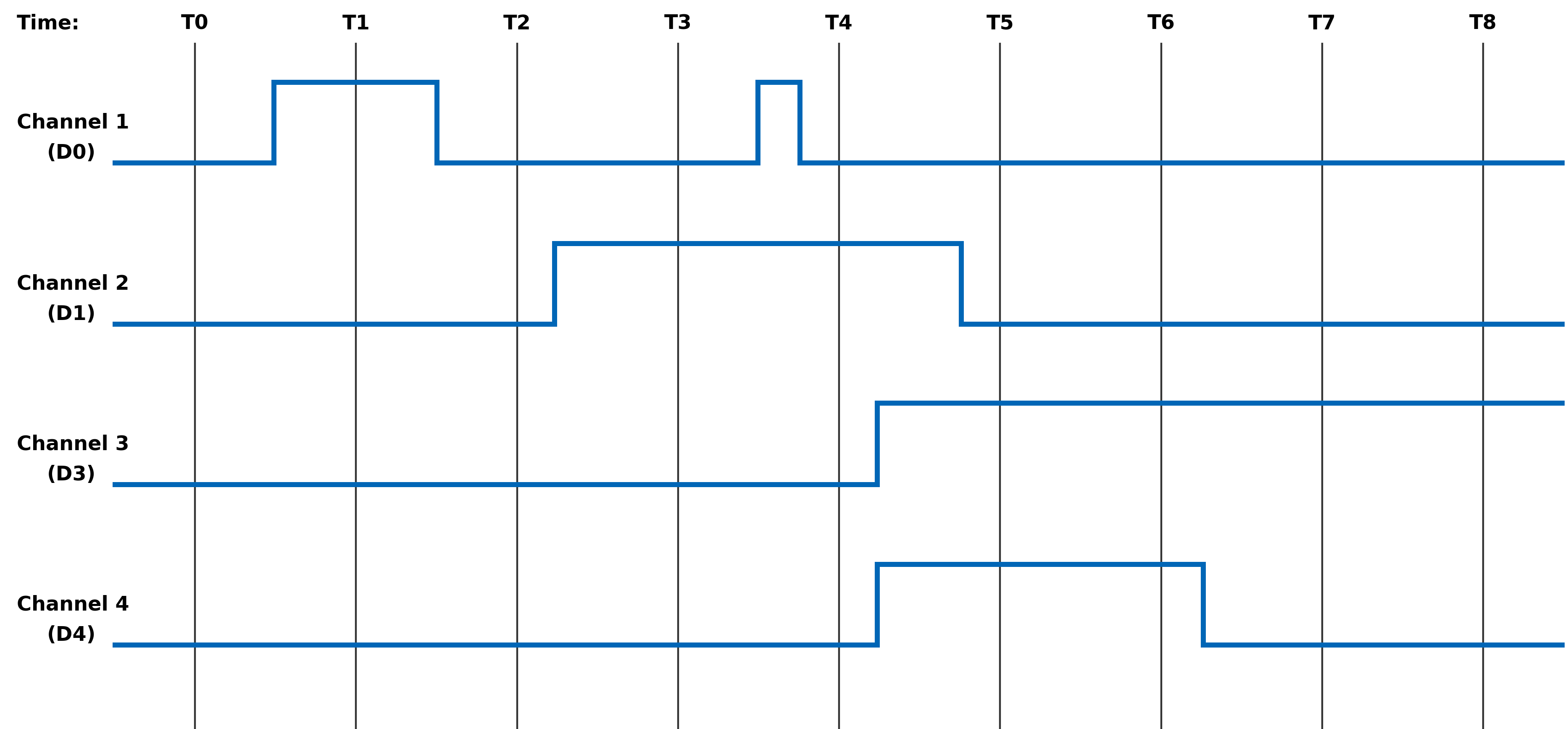
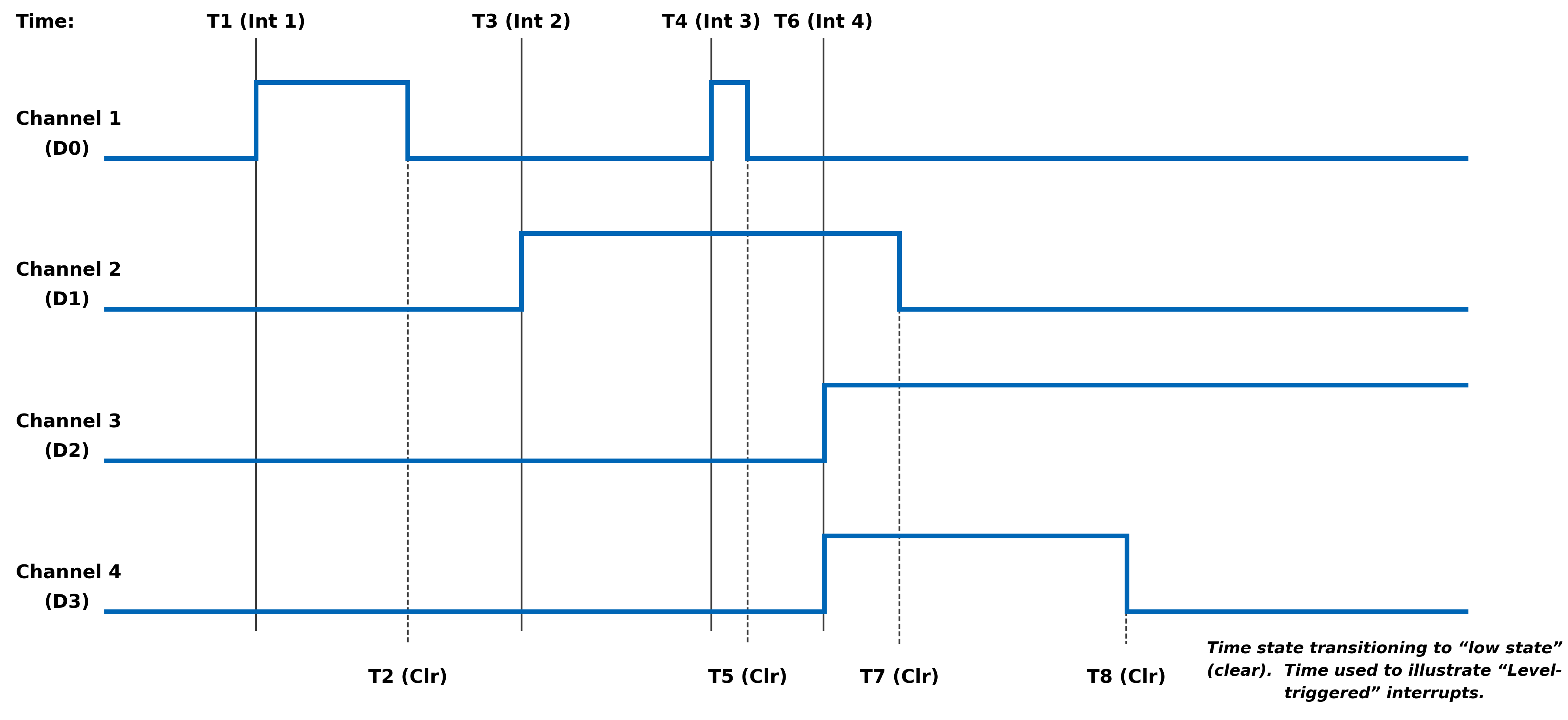
USER WATCHDOG TIMER MODULE MANUAL
User Watchdog Timer Capability
The User Watchdog Timer (UWDT) Capability is available on the following modules:
AC Reference Source Modules
- AC1 - 1 Channel, 2-115 Vrms, 47 Hz - 20kHz
- AC2 - 2 Channels, 2-28 Vrms, 47 Hz - 20kHz
- AC3 - 1 Channel, 28-115 Vrms, 47 Hz - 2.5 kHz
Differential Transceiver Modules
- DF1/DF2 - 16 Channels Differential I/O
Digital-to-Analog (D/A) Modules
- DA1 - 12 Channels, ±10 VDC @ 25 mA, Voltage or Current Control Modes
- DA2 - 16 Channels, ±10 VDC @ 10 mA
- DA3 - 4 Channels, ±40 VDC @ ±100 mA, Voltage or Current Control Modes
- DA4 - 4 Channels, ±80 VDC @ 10 mA
- DA5 - 4 Channels, ±65 VDC or ±2 A, Voltage or Current Control Modes
Digital-to-Synchro/Resolver (D/S) or Digital-to-L( R )VDT (D/LV) Modules
- (Not supported)
Discrete I/O Modules
DT1/DT4 - 24 Channels, Programmable for either input or output, output up to 500 mA per channel from an applied external 3 - 60 VCC source.
DT2/DT5 - 16 Channels, Programmable for either input voltage measurements (±80 V) or as a bi-directional current switch (up to 500 mA per channel).
DT3/DT6 - 4 Channels, Programmable for either input voltage measurements (±100 V) or as a bi-directional current switch (up to 3 A per channel).
TTL/CMOS Modules
- TL1-TL8 - 24 Channels, Programmable for either input or output.
Principle of Operation
The User Watchdog Timer is optionally activated by the applications that require the module’s outputs to be disabled as a failsafe in the event of an application failure or crash. The circuit is designed such that a specific periodic write strobe pattern must be executed by the software to maintain operation and prevent the disablement from taking place.
The User Watchdog Timer is inactive until the application sends an initial strobe by writing the value 0x55AA to the UWDT Strobe register. After activating the User Watchdog Timer, the application must continually strobe the timer within the intervals specified with the configurable UWDT Quiet Time and UWDT Window registers. The timing of the strobes must be consistent with the following rules:
- The application must not strobe during the Quiet time.
- The application must strobe within the Window time.
- The application must not strobe more than once in a single window time.
A violation of any of these rules will trigger a User Watchdog Timer fault and result in shutting down any isolated power supplies and/or disabling any active drive outputs, as applicable for the specific module. Upon a User Watchdog Timer event, recovery to the module shutting down will require the module to be reset.
The Figure 1 and Figure 2 provides an overview and an example with actual values for the User Watchdog Timer Strobes, Quiet Time and Window. As depicted in the diagrams, there are two processes that run in parallel. The Strobe event starts the timer for the beginning of the “Quiet Time”. The timer for the Previous Strobe event continues to run to ensure that no additional Strobes are received within the “Window” associated with the Previous Strobe.
The optimal target for the user watchdog strobes should be at the interval of [Quiet time + ½ Window time] after the previous strobe, which will place the strobe in the center of the window. This affords the greatest margin of safety against unintended disablement in critical operations.
Figure 1. User Watchdog Timer Overview
Figure 2. User Watchdog Timer Example
Figure 3. User Watchdog Timer Failures
Register Descriptions
The register descriptions provide the register name, Type, Data Range, Read or Write information, Initialized Value, and a description of the function.
User Watchdog Timer Registers
The registers associated with the User Watchdog Timer provide the ability to specify the UWDT Quiet Time and the UWDT Window that will be monitored to ensure that EXACTLY ONE User Watchdog Timer (UWDT) Strobe is written within the window.
UWDT Quiet Time Function: Sets Quiet Time value (in microseconds) to use for the User Watchdog Timer Frame. Type: unsigned binary word (32-bit) Data Range: 0 µsec to 2^32 µsec (0x0 to 0xFFFFFFFF) Read/Write: R/W Initialized Value: 0x0 Operational Settings: LSB = 1 µsec. The application must NOT write a strobe in the time between the previous strobe and the end of the Quiet time interval. In addition, the application must write in the UWDT Window EXACTLY ONCE. UWDT Window Function: Writes the window value (in microseconds) to be used for the User Watchdog Timer Frame. Type: unsigned binary word (32-bit) Data Range: 0 µsec to 2^32 µsec (0x0 to 0xFFFFFFFF) Read/Write: R/W Initialized Value: 0x0 Operational Settings: LSB = 1 µsec. The application must write the strobe once within the Window time after the end of the Quiet time interval. The application must write in the UWDT Window EXACTLY ONCE. This setting must be initialized to a non-zero value for operation and should allow sufficient tolerance for strobe timing by the application. UWDT Strobe Function: Writes the strobe value to be use for the User Watchdog Timer Frame. Type: unsigned binary word (32-bit) Data Range: 0x55AA Read/Write: W Initialized Value: 0x0 Operational Settings: At startup, the user watchdog is disabled. Write the value of 0x55AA to this register to start the user watchdog timer monitoring after initial power on or a reset. To prevent a disablement, the application must periodically write the strobe based on the user watchdog timer rules. Status and Interrupt
The modules that are capable of User Watchdog Timer support provide status registers for the User Watchdog Timer.
User Watchdog Timer Status
The status register that contains the User Watchdog Timer Fault information is also used to indicate channel Inter-FPGA failures on modules that have communication between FPGA components. There are four registers associated with the User Watchdog Timer Fault/Inter-FPGA Failure Status: Dynamic, Latched, Interrupt Enable, and Set Edge/Level Interrupt.
Function: Sets the corresponding bit (D31) associated with the channel’s User Watchdog Timer Fault error. Type: unsigned binary word (32-bit) Data Range: 0x0000 0000 to 0xFFFF FFFF Read/Write: R (Dynamic), R/W (Latched, Interrupt Enable, Set Edge/Level Interrupt) Initialized Value: 0
User Watchdog Timer Fault/Inter-FPGA Failure Dynamic Status User Watchdog Timer Fault/Inter-FPGA Failure Latched Status User Watchdog Timer Fault/Inter-FPGA Failure Interrupt Enable User Watchdog Timer Fault/Inter-FPGA Failure Set Edge/Level Interrupt Bit(s) Status Description D31 User Watchdog Timer Fault Status 0 = No Fault + 1 = User Watchdog Timer Fault D30:D0 Reserved for Inter-FPGA Failure Status Channel bit-mapped indicating channel inter FPGA communication failure detection. Interrupt Vector and Steering
When interrupts are enabled, the interrupt vector associated with the specific interrupt can be programmed (typically with a unique number/identifier) such that it can be utilized in the Interrupt Service Routine (ISR) to identify the type of interrupt. When an interrupt occurs, the contents of the Interrupt Vector registers is reported as part of the interrupt mechanism.
In addition to specifying the interrupt vector, the interrupt can be directed (“steered”) to the native bus or to the application running on the onboard ARM processor.
Note
the Interrupt Vector and Interrupt Steering registers are mapped to the Motherboard Common Memory and these registers are associated with the Module Slot position (refer to Function Register Map).
Interrupt Vector Function: Set an identifier for the interrupt. Type: unsigned binary word (32-bit) Data Range: 0 to 0xFFFF FFFF Read/Write: R/W Initialized Value: 0 Operational Settings: When an interrupt occurs, this value is reported as part of the interrupt mechanism. Interrupt Steering Function: Sets where to direct the interrupt. Type: unsigned binary word (32-bit) Data Range: See table Read/Write: R/W Initialized Value: 0 Operational Settings: When an interrupt occurs, the interrupt is sent as specified:
Direct Interrupt to VME 1 Direct Interrupt to ARM Processor (via SerDes)
(Custom App on ARM or NAI Ethernet Listener App)2 Direct Interrupt to PCIe Bus 5 Direct Interrupt to cPCI Bus 6 Function Register Map
KEY
Configuration/Control Measurement/Status
USER WATCHDOG TIMER REGISTERS OFFSET REGISTER NAME ACCESS OFFSET REGISTER NAME ACCESS 0x01C0 UWDT Quiet Time R/W 0x01C4 UWDT Window R/W 0x01C8 UWDT Strobe R/W STATUS REGISTERS *When an event is detected, the bit associated with the event is set in this register and will remain set until the user clears the event bit. Clearing the bit requires writing a 1 back to the specific bit that was set when read (i.e., write-1-to-clear, writing a “1” to a bit set to “1” will set the bit to “0”). OFFSET REGISTER NAME ACCESS OFFSET REGISTER NAME ACCESS 0x09B0 Dynamic Status R 0x09B4 Latched Status* R/W 0x09B8 Interrupt Enable R/W 0x09BC Set Edge/Level Interrupt R/W INTERRUPT REGISTERS The Interrupt Vector and Interrupt Steering registers are mapped to the Motherboard Memory Space and these addresses are absolute based on the module slot position. In other words, do not apply the Module Address offset to these addresses. OFFSET REGISTER NAME ACCESS OFFSET REGISTER NAME ACCESS 0x056C Module 1 Interrupt Vector 28 - User Watchdog Timer Fault/Inter-FPGA Failure R/W 0x066C Module 1 Interrupt Steering 28 - User Watchdog Timer Fault/Inter-FPGA Failure R/W 0x076C Module 2 Interrupt Vector 28 - User Watchdog Timer Fault/Inter-FPGA Failure R/W 0x086C Module 2 Interrupt Steering 28 - User Watchdog Timer Fault/Inter-FPGA Failure R/W 0x096C Module 3 Interrupt Vector 28 - User Watchdog Timer Fault/Inter-FPGA Failure R/W 0x0A6C Module 3 Interrupt Steering 28 - User Watchdog Timer Fault/Inter-FPGA Failure R/W 0x0B6C Module 4 Interrupt Vector 28 - User Watchdog Timer Fault/Inter-FPGA Failure R/W 0x0C6C Module 4 Interrupt Steering 28 - User Watchdog Timer Fault/Inter-FPGA Failure R/W 0x0D6C Module 5 Interrupt Vector 28 - User Watchdog Timer Fault/Inter-FPGA Failure R/W 0x0E6C Module 5 Interrupt Steering 28 - User Watchdog Timer Fault/Inter-FPGA Failure R/W 0x0F6C Module 6 Interrupt Vector 28 - User Watchdog Timer Fault/Inter-FPGA Failure R/W 0x106C Module 6 Interrupt Steering 28 - User Watchdog Timer Fault/Inter-FPGA Failure R/W REVISION HISTORY
Motherboard Manual - Status and Interrupts Revision History Revision Revision Date Description C 2021-11-30 C08896; Transition manual to docbuilder format - no technical info change. DOCS.NAII REVISIONS
Link to original
Revision Date Description 2026-03-02 Formatting updates to document; no technical changes.
Revision History
| Module Manual - DA4 Revision History | ||
| Revision | Revision Date | Description |
| C | 2022-11-03 | ECO C09774, initial release of module manual. |
| Module Manual - Status and Interrupts Revision History | ||
| Revision | Revision Date | Description |
| C | 2021-11-30 | C08896; Transition manual to docbuilder format - no technical info change. |
| Module Manual - User Watchdog Timer Revision History | ||
| Revision | Revision Date | Description |
| C | 2021-11-30 | C08896; Transition manual to docbuilder format - no technical info change. |
NAI Cares
North Atlantic Industries (NAI) is a leading independent supplier of Embedded I/O Boards, Single Board Computers, Rugged Power Supplies, Embedded Systems and Motion Simulation and Measurement Instruments for the Military, Aerospace and Industrial Industries. We accelerate our clients’ time-to-mission with a unique approach based on a Configurable Open Systems Architecture™ (COSA®) that delivers the best of both worlds: custom solutions from standard COTS components.
We have built a reputation by listening to our customers, understanding their needs, and designing, testing and delivering board and system-level products for their most demanding air, land and sea requirements. If you have any applications or questions regarding the use of our products, please contact us for an expedient solution.
Please visit us at: www.naii.com or select one of the following for immediate assistance:
Documentation
FAQ
Application Notes
http://www.naii.com/applicationnotes
Calibration and Repairs
http://www.naii.com/calibrationrepairs
Call Us
(631) 567-1100
Link to original